What Two of Swords means in tarot — and in love
The Two of Swords is the blindfolded heart: a decision dodged, two options balanced so long the balancing became the lifestyle. As feelings, the Two of Swords means conflicted avoidance — they feel pulled and refuse to look at it directly.
Jump to FAQAt a glance
- Yes or no
- No — reversed flips it
- Element
- Air
- Upright, in a line
- a stalemate, refusing to see or choose
- Reversed, in a line
- the blindfold slipping, a decision forced
Want a yes or no on your own situation rather than this card? Pull one card and get the verdict with the reason behind it.
Ask your own yes-or-no questionIn the Golden Dawn tradition this card rules 0–10° of Libra. A planet standing at that degree is read through it: Venus in Libra · Moon in Libra · Mars in Libra
Upright in love
The Two of Swords is the blindfolded heart: a decision dodged, two options balanced so long the balancing became the lifestyle. Choosing between people, between staying and leaving, between saying it and swallowing it. If you asked 'what are they thinking?' — they're stuck, deliberately not-looking. The stalemate holds until someone removes the blindfold. Truces aren't peace.
What makes this card specific is that the not-deciding is active. It takes effort. Every day the situation stays balanced, somebody is doing the balancing — declining to ask, declining to answer, keeping both swords level. That is why the card feels calm and is not. Underneath the stillness there is a person holding two heavy things up and getting tired.
In a new connection it is the situation with no name. You see each other, it is good, nobody asks what it is, and the not-asking has quietly become the arrangement. Both people can usually feel the question in the room and both have decided that raising it costs more than living around it. That works for a while and then stops working, because ambiguity has a half-life and this one is running out.
In an established relationship it is the truce. A real problem exists, both people know its shape, and it has been agreed without words that it will not be discussed. Life continues, politely. What this card wants you to see is that the politeness is not peace, it is management, and the difference shows up in how tired you both are.
The instruction is small and hard: look at one thing. Not decide, not act, not have the whole conversation. Take the blindfold off long enough to admit what you already know about which way you are leaning. Almost everyone drawing this card knows. The blindfold is not there because the answer is hidden. It is there because the answer has consequences.
Reversed in love
Reversed, the Two of Swords is the blindfold slipping: the avoided choice forcing itself, information arriving that makes neutrality impossible. Decision paralysis breaking — sometimes messily. The relief on the far side of choosing is real. Pick, apologize where owed, breathe again.
The reversal takes the stillness out. Something moves — a fact surfaces, a third person acts, someone runs out of patience, or you simply wake up one day unable to keep pretending you have no preference. However it happens, the balance stops being available. That is usually good news delivered badly.
In a new connection reversed most often means the question gets asked. Sometimes you ask it. Sometimes they do. Sometimes circumstance asks it for both of you by producing a situation where undefined is no longer a possible answer. Expect the resolution to be less graceful than the version you rehearsed, and expect it to be a genuine relief regardless of which way it goes.
In an established situation the reversed card is the truce breaking. The unspoken thing gets spoken, usually at the wrong moment and louder than intended, because a subject held down for a year does not come out calmly. This is not a failure. Suppressed material does not have a dignified exit; it has an exit or it stays and does damage quietly.
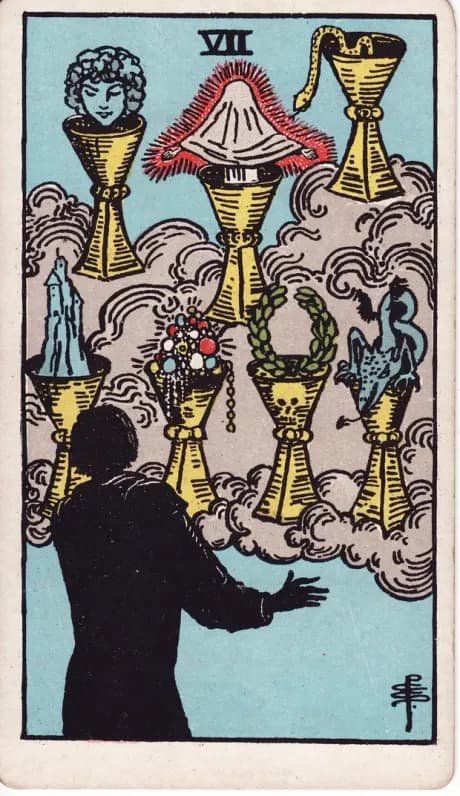
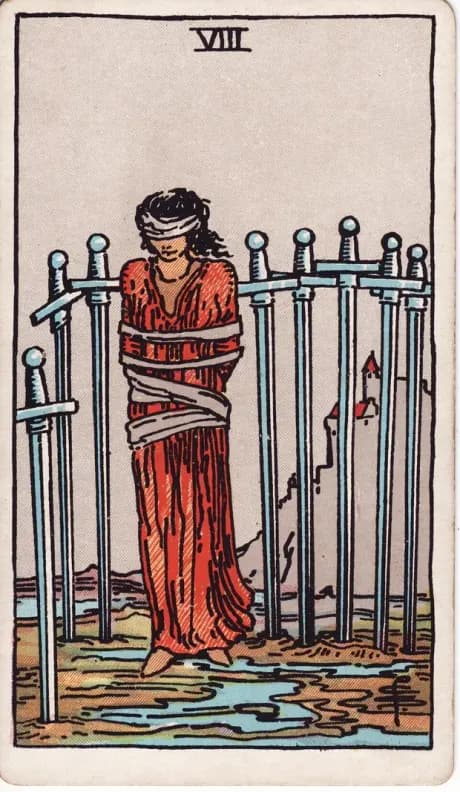
There is a harder version. Reversed can also mean the standoff continuing past the point where it could still be defended — the blindfold not slipping but being tied tighter, information deliberately refused, someone choosing not to know. That reading tends to appear with the Eight of Swords or the Seven of Cups nearby, and it is the version where waiting has stopped being neutral and started being an answer.
Two of Swords As feelings
As feelings, the Two of Swords means conflicted avoidance — they feel pulled and refuse to look at it directly. Two truths fight behind the calm face. Their silence is indecision wearing armor.
If you are single and asking about someone new. They are interested and they are not letting themselves examine it. Usually there is a reason with a name — someone else, a recent ending they have not processed, a decision about their own life that has to be made before yours can be. The feeling is real. The access to it is what is blocked, and pushing for a declaration now gets you the answer that costs them least, which is usually no.
If you are in a relationship. They are holding something back and calling it keeping the peace. There is a thought they have decided not to have out loud, and the calm you are reading is the effort of not having it. This card rarely means indifference; the crossed swords take strength to hold. Ask about the specific thing rather than about how they feel in general, because the general question is easy to answer politely.
If you are asking about an ex. They feel two things at once and have chosen to feel neither. Missing you and protecting themselves, both real, both cancelled out. Nothing will move on their side, because the whole position is built on not moving. Any warmth you get in this state is genuine and means nothing about what they will do.
If you are asking about someone long-term. A subject has been quietly closed between you. Not a secret exactly, more an agreed silence that has been in place so long neither of you remembers agreeing. Their feelings are not in doubt. Their willingness to look at the difficult part is, and the longer the silence has held the more ordinary it feels to keep holding it. Naming the subject once, without accusation, is usually enough to find out whether the silence was protection or habit.
Two of Swords For your ex
For an ex, the Two of Swords means they sit between missing you and protecting themselves, choosing neither. Don't wait forever on a blindfolded person. State your position once, clearly; then let their choice be theirs.
This is one of the harder cards to draw about an ex because it is not rejection and it will not resolve on its own. Rejection at least lets you leave. This says the door is neither open nor closed, and that the person holding it has an interest in keeping it exactly there. As long as nothing is decided, nothing is lost.
Often the balance is being kept by something concrete. Pride, an unfinished apology, a version of events they would have to revise, a new situation they have not admitted to. It can also be simple exhaustion: some people leave a relationship without the energy to have any more feelings about it, and the blindfold is rest rather than strategy.
What does not work is waiting more skilfully. Signals, occasional messages, being visible and available and undemanding — all of that is compatible with the standoff and helps maintain it. The situation stays comfortable for them precisely because you keep it comfortable.
What does work is a single clear statement with no question attached. Say what you want, say it once, and then be genuinely gone from the negotiation. That removes the option of balancing, which is the only thing that has ever moved this card. Sometimes it produces an answer. Sometimes it produces silence, which is also an answer and costs you less than another year of holding a sword up.
What Two of Swords means in general
A blindfolded figure sits with two crossed blades and the sea behind her: she has made the decision impossible by refusing to look. The card's subject is the stalemate you are maintaining — a choice deferred, information deliberately not sought, a truce that holds only because nobody moves.
Upright it says the deadlock is self-imposed, and that the blindfold comes off before anything else can happen. This is the important part and the part most readings miss. The card does not describe being trapped between two forces. It describes standing between them with your eyes shut, which is a position you can leave at any moment and are choosing not to. The stillness is not stability. It is effort, spent continuously, producing nothing.
Reversed the blindfold lifts. The decision is made, the information arrives, or the standoff breaks — sometimes into relief, sometimes into the conflict that was being avoided. Occasionally reversed means the opposite and worse: the refusal hardening into a policy.
In practical matters it is the offer left unanswered, the report not read, the meeting nobody schedules, the diagnosis nobody asks for. All of those are decisions, taken by default and dressed as neutrality. At work it is the team that keeps two incompatible plans alive because killing one means admitting the other was right. In money it is the statement not opened. In creative work it is the project held at exactly ninety per cent, where it can still be anything and cannot yet fail.
The pair of blades is the point. Two of anything is a relation between things, and here the relation is a standoff — equal weight, opposite directions, nothing moving until somebody puts one down.
Two of Swords as a yes or no
As a yes or no, the Two of Swords is neither, and it is one of the few cards where that is a real answer rather than an evasion. It describes a situation that has not resolved, being held in place by someone who is not looking at it. There is no outcome yet to say yes or no about.
If you want the closest thing to a verdict: upright reads as no. Not a refusal — a not yet, and a not yet that will keep being not yet until something changes. Nothing in this card moves by itself. If your question was whether the situation will progress on its own in the timeframe you asked about, the honest answer is that it will not.
Reversed it becomes a qualified yes. The deadlock breaks and an actual answer becomes available, though the card says nothing about which answer. What it promises is movement and the end of the balancing act, which for most people asking this question is the thing they actually needed.
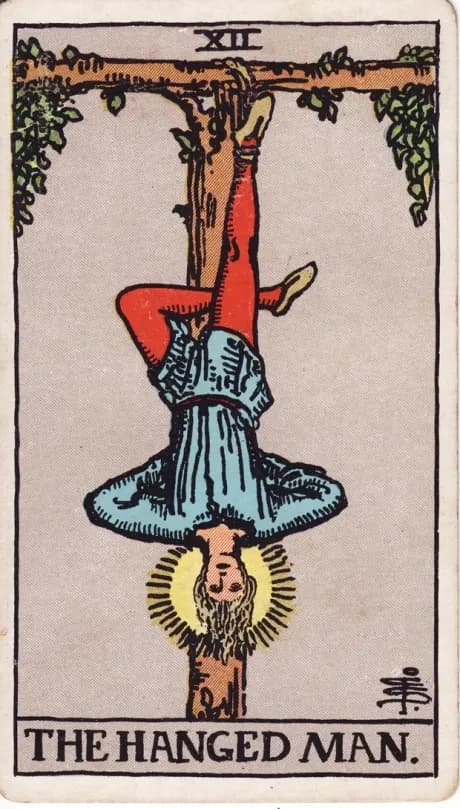
This is one of the small group of cards that genuinely resists the format — the Seven of Cups and the Hanged Man do the same. A better question is almost always available and it is not about the other person. Ask what you are refusing to look at. Ask what you would have to accept if you decided. Ask what the stalemate is protecting, because it is protecting something or it would not be so carefully maintained. Those questions the deck answers well, and answering them is the only route to a yes or no that means anything.
Two of Swords as advice
As advice, the Two of Swords says: take the blindfold off. That is the entire instruction, and it is smaller than it sounds. You are not being told to decide, act, confront anyone or fix the situation today. You are being told to stop declining to look at the one piece of information that would make the decision obvious.
In practice that usually means asking a question whose answer you suspect. Read the message you have been leaving unopened. Ask the direct thing. Find out what the other person actually wants rather than continuing to model them in your head. Most stalemates are maintained by a missing fact that nobody has gone to get, because whoever gets it will then have to respond to it.
The second piece of advice is about the cost of the current arrangement. Write down what holding this balance takes from you each week — attention, sleep, honesty with friends, whatever it is. People almost always underestimate it, because the cost is spread thin and the alternative arrives all at once. Seeing it totalled up is usually what breaks the tie.
Do not confuse this card with patience. The Hanged Man advises waiting and means it. This one advises looking, and dressing avoidance as patience is exactly the mistake it describes.
Reversed, the advice is simply to follow through. The information has arrived or the choice has been forced, and the remaining task is to act on it rather than reassembling the old balance out of habit. Where you owe an apology for a year of silence, give it once, plainly, without a defence attached.
Two of Swords as an outcome
As an outcome, the Two of Swords means the situation does not resolve. It arrives at a standstill and stays there: nobody decides, nobody leaves, nobody names it. That is a genuine result rather than the deck declining to answer, and read as a result it says something specific — the thing you are asking about will not settle itself in the period you asked about.
In a love question this looks like a situation preserved in place. Contact continues at exactly the current temperature. The question that needs asking goes on not being asked. If you were hoping for a natural resolution, this card says there is no natural resolution available; the equilibrium is stable and both people are contributing to keeping it that way.
That makes it one of the more actionable outcomes in the deck, because the ending it predicts is conditional. It describes what happens if nothing changes, and the thing that would change it is small and entirely within reach. Almost every other stuck card requires waiting for circumstances. This one requires one person to look.
Reversed as an outcome is better. The standoff ends. Something arrives that makes neutrality impossible and the situation finally goes one way, with an actual answer at the end of it. Expect the ending to be less tidy than the version you have imagined, since positions held for a long time tend to come down abruptly. The relief is usually disproportionate to the size of what was decided, which tells you how much the balancing was costing.
What the Two of Swords card shows
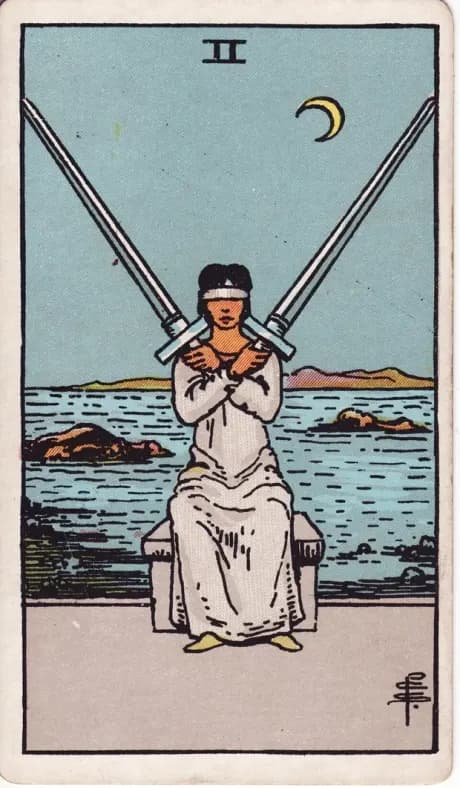
The 1909 card shows a seated woman in a pale grey gown, blindfolded with a white cloth, holding two long swords crossed over her chest with the blades resting against her shoulders. Her arms are folded across herself in a closed X. Everything about the pose is symmetrical: equal weight in each hand, spine straight, head level. It is a position that looks restful and is not — try holding two swords up like that for a minute.
The blindfold is the argument of the card. She is not blind. Someone tied that on, and in most readings the someone is her. What she cannot see is directly in front of her, which is where the viewer is standing.
Behind her is water: a wide bay dotted with small rocky islands, the surface calm. She sits with her back to it. Water in this deck is feeling and instinct, and the swords are thought, so the composition puts the two in opposition and shows her facing away from the softer one. The rocks matter too. They are the parts of the situation that are not visible from where she sits, close enough to run aground on.
A crescent moon hangs in the upper right, thin and early in its cycle. It gives just enough light to see by and not enough to see clearly — the deck's usual mark for partial information and for a situation that is still developing rather than finished.
She sits on a plain stone bench on a narrow strip of grey ground between the water and the edge of the card. There is no path drawn, no building, no other figure. Nothing in the picture is coming to move her. That is the honest part of the image: the only thing in the scene capable of changing it is sitting still with its eyes covered.
Frequently asked
What does the Two of Swords mean in love?
+
A stalemate: choice avoided, feelings blocked behind crossed swords. Movement returns when someone finally looks. It is not indifference and not a shortage of feeling — the position takes effort to hold, which is why it eventually ends whether or not anyone plans it.
Does the Two of Swords mean they can't decide about me?
+
Usually yes — torn and avoiding the decision, often for a reason that has a name they have not said out loud. Clarity from you can force the look they are dodging. Pressing for a verdict too early tends to get the answer that costs them least, which is the safe one.
Is the Two of Swords a yes or a no?
+
Upright it is closest to a no, meaning not yet and not without someone acting — nothing here moves on its own. Reversed it becomes a qualified yes: the deadlock breaks and a real answer becomes available, though the card does not say which answer it will be.
What should I do when I draw the Two of Swords?
+
Look at the one thing you have been declining to look at. Ask the question whose answer you already suspect, or get the fact you have avoided getting. You are not being told to decide today — only to stop keeping the information out, since the deadlock is built entirely from not knowing on purpose.
How long does a Two of Swords situation last?
+
As long as it is maintained, which can be years. This card describes a stable arrangement, not a passing phase, and stable is the problem. It ends when someone removes the blindfold or when an outside event makes neutrality impossible — not through time passing on its own.