Why Did He Ghost Me? The Cards Explain
Ghosting is almost always about his capacity, not your worth. The cards name which: the Seven of Cups for someone with too many options, the Eight of Cups for a quiet exit, the Knight of Swords for panic, the Moon for a life he was not showing you. None of those readings ask you to wait.
Pull my cards on thisCards deal the moment you tap. First reading free, no signup.
Ghosting is a message delivered by absence — and tarot is unusually good at reading what the vanishing actually said. Cowardice, overwhelm, a parallel life you weren't shown, or feelings that scared him more than silence embarrassed him. The cards won't excuse the exit, but they'll decode it — and decoding is how you stop writing fan-fiction about his reasons.
Which cards speak to this
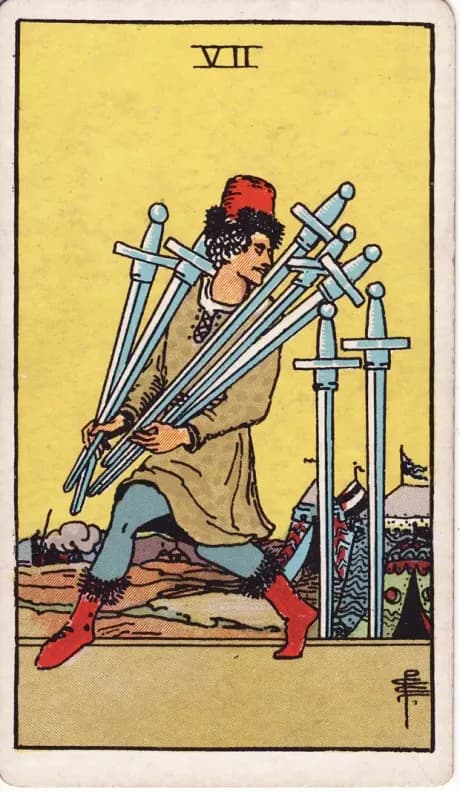
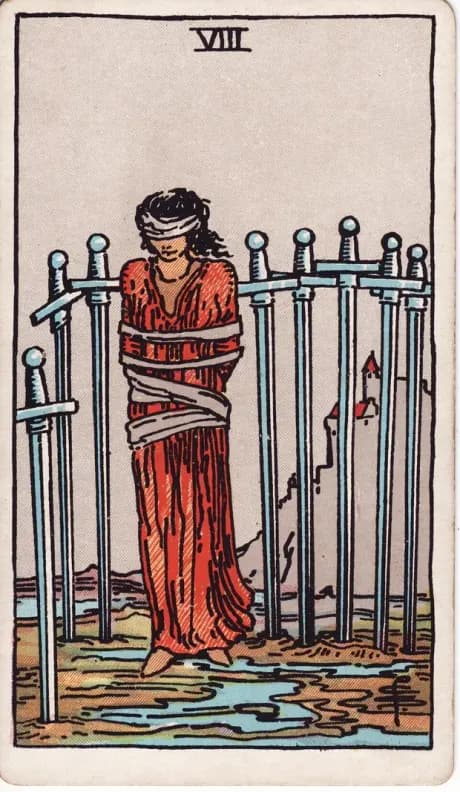
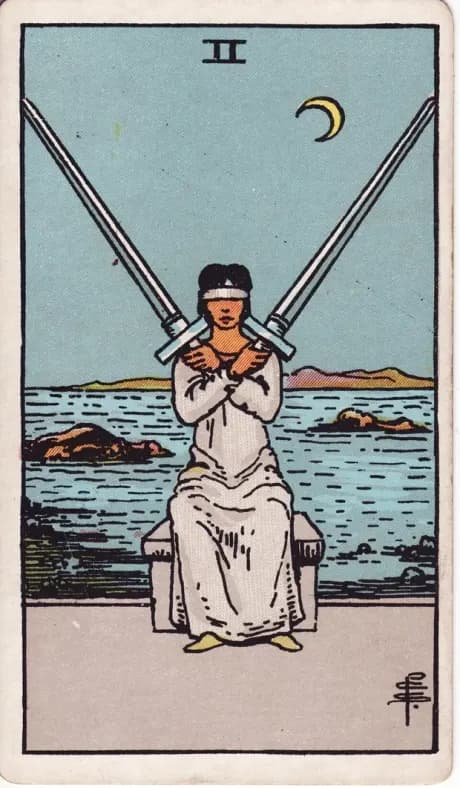
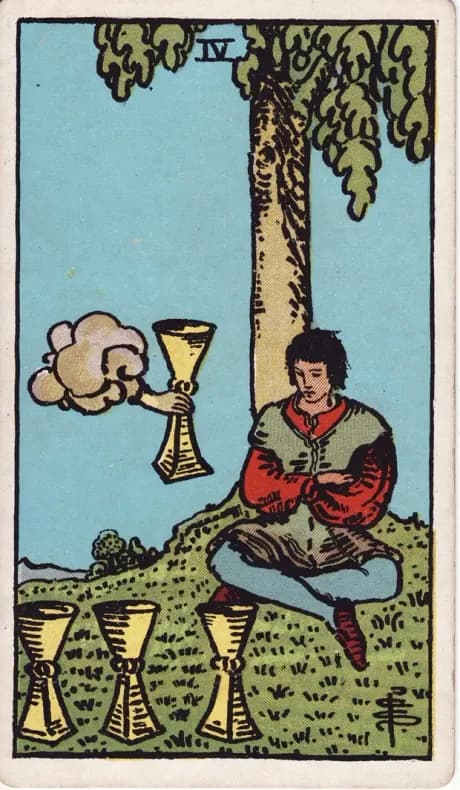
The Seven of Swords is the classic ghost — leaving sideways to avoid the honest conversation. The Eight of Swords shows him trapped in his own head, believing he had no words. The Two of Swords means he couldn't choose, so he chose nothing. The Knight of Wands burns bright and exits fast — pattern, not exception. The Moon suggests hidden factors you were never shown. And the Four of Cups: he checked out of everything, not just you.
What actually tells you
Ghosting almost always has a run-up, and it is visible in hindsight. Replies get shorter and slower in a way that is not explained by his week. Plans get made vaguely and confirmed late. Questions about him get answered; questions about the two of you get deflected. That drift usually runs two to four weeks before the silence.
There is a second pattern worth naming: a burst of unusual warmth right before the disappearance. It is not manipulation. It is guilt showing up early, and it is one of the reasons the ending feels so disorienting — the last data point was good.
What the ghosting itself tells you is about capacity, not about your worth. People who vanish do it consistently, across friendships and jobs, because conflict costs them more than disappearance does. If you know anything about how he has ended things before, that is a better predictor than anything that happened between you.
And the sign that it was never about you at all: the disappearance is total and immediate rather than gradual. Sudden, complete silence usually means something in his life changed, not that something in yours was found wanting.
How long this usually takes
The silence has a shape and knowing it prevents a lot of unnecessary hope.
The first seventy-two hours are genuinely ambiguous. People lose phones, have terrible weeks, sit on a reply until it becomes awkward to send. Reading anything into three days is premature.
Between one and two weeks, the silence becomes a decision — not necessarily a considered one, but the window where he could explain has closed and he knows it. After that the reason for the silence changes: it stops being avoidance of you and becomes avoidance of the awkwardness of returning.
Which produces the thing people do not expect: the reappearance. A large share of ghosts resurface somewhere between one and six months, usually with no reference to the gap. That message is not a reversal. It is the path of least resistance re-opening, and it will close again the moment it requires anything.
If you are waiting for an explanation, the honest timeline is that it usually never comes, and that the version you would get months later would be reconstructed rather than true.
What to do with this
Send one message, if you want to, and make it the last one. Something plain: that you noticed, that you would rather know than guess, that you are fine either way. Then stop. That message protects your own sense of yourself, which is the only thing here you can still affect.
Do not send the series. The follow-up, the check-in, the eventually-angry one, the apology for the angry one — every one of those trades your position for a reply you have already been refused.
Then do the work that actually helps, which is not about him. Ghosting hurts disproportionately because it denies you a reason, and a mind without a reason will manufacture one, almost always at your own expense. Write down what you would tell a friend in your situation. The gap between that and what you are telling yourself is the injury, and it is treatable.
And give it a shape: block or do not block, but decide, rather than leaving the channel open so hope can keep using it.
What this question usually gets wrong
The central misreading is that the silence contains a message about you. It usually contains a message about him — his conflict tolerance, what else is happening in his life, how he has ended every previous thing. Making yourself the subject of someone else's avoidance is the source of most of the damage.
Second: the belief that an explanation would help. People imagine the reason would settle something. In practice the explanations ghosts give when pressed are thin, retrofitted and unsatisfying, and the wanting was never really about information.
Third: reading the reappearance as vindication. When he surfaces in four months, that is not the ending being reversed. It is the cheapest possible contact resuming, and the same forces that produced the silence are entirely intact.
And the useful limit of a reading here: it will not tell you what was going on in his head, and anyone who claims to is guessing. What it can do — and this is the thing worth asking — is show you what you were actually in, which is often clearer from the outside than it ever was from within it.
Here's what every ghost-spread ultimately reveals: his silence was information about him, not a verdict about you.
Pull the cards for closure — then close the case file yourself. You were never the unanswered question.
Cards in this answer


Questions people ask next
Do ghosters ever come back?
+
Often, and usually without acknowledging the silence. Treat a reappearance as a request for low-cost contact rather than a reconsideration. What it means depends entirely on whether he addresses the gap unprompted.
Should I ask him why he ghosted me?
+
Once, if it would settle something for you — and expect either no answer or a thin one. Ask for your own sake, not for information, and do not build a plan around getting a reply.
Is ghosting about me or about him?
+
Almost always about his capacity for uncomfortable conversations, which predates you. The strongest evidence is how he has ended other things; ghosting is rarely a one-off.
Which cards show why someone disappeared?
+
The Eight of Cups is the walk-away, the Seven of Swords the exit without a conversation, the Four of Swords a withdrawal that is about his own state rather than about you. The Moon speaks to a reason you were never given.