Will He Ever Commit? The Cards Weigh In
Commitment is a ledger in his head: freedom against safety, old damage against present evidence. The Four of Wands and Ten of Pentacles say he can. The Knight of Swords, Seven of Cups and Two of Swords say not now, and possibly not with anyone. Waiting rarely moves that ledger on its own.
Pull my cards on thisCards deal the moment you tap. First reading free, no signup.
Commitment-phobia is rarely about you and always about the ledger in his head: freedom versus safety, past damage versus present desire. Tarot reads that ledger. The cards show whether he's slow-building toward certainty, permanently allergic, or committed already in every way except the vocabulary. Each needs a completely different strategy from you — including, sometimes, the exit.
Which cards speak to this
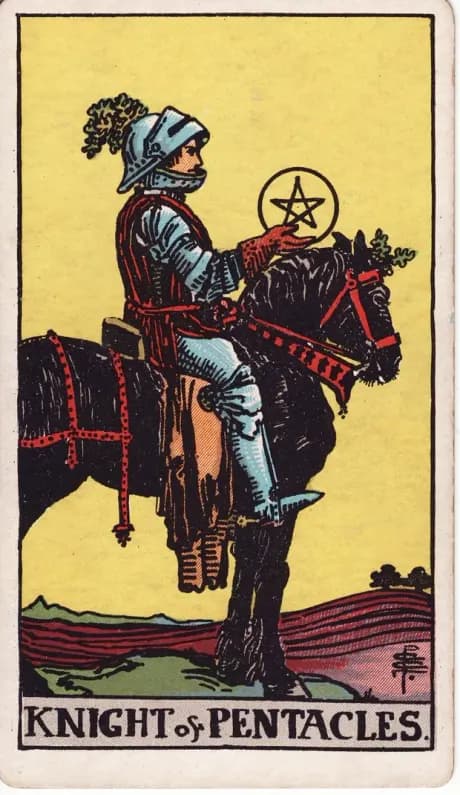
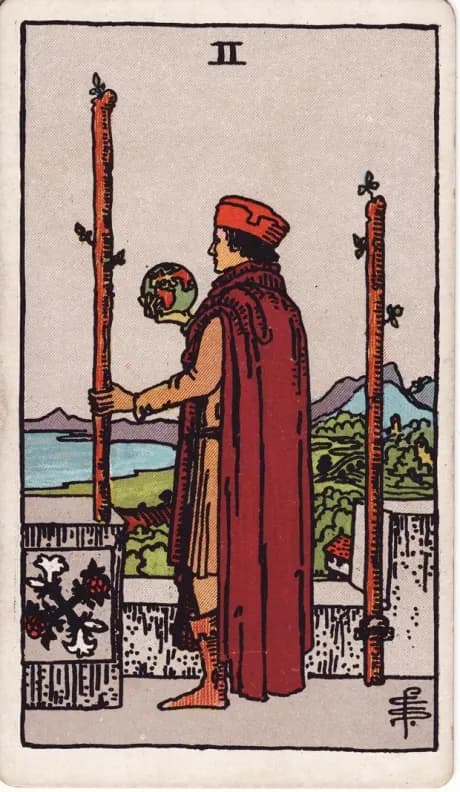
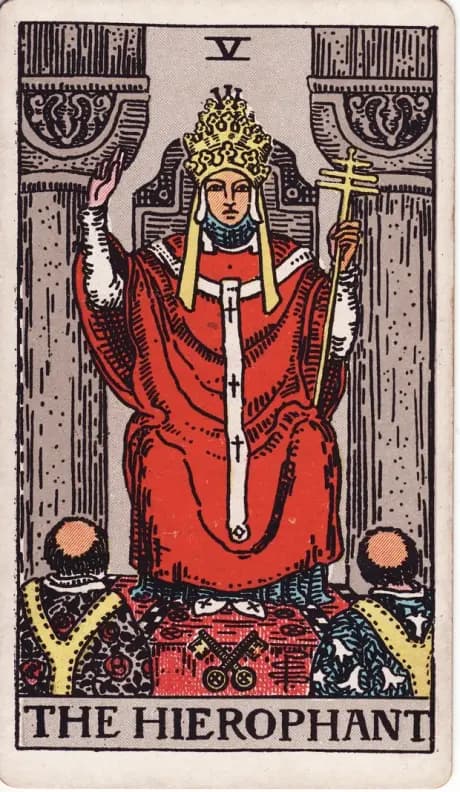
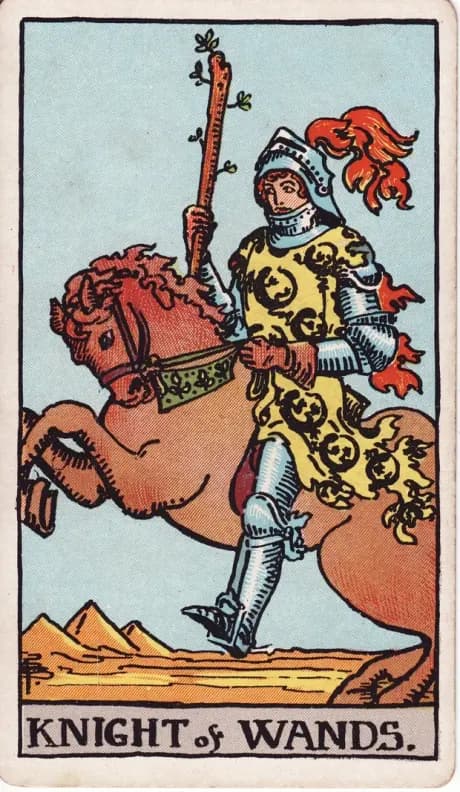
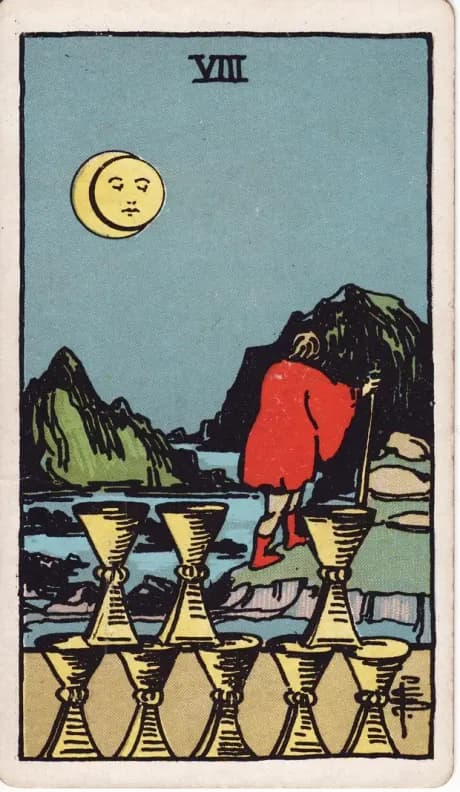
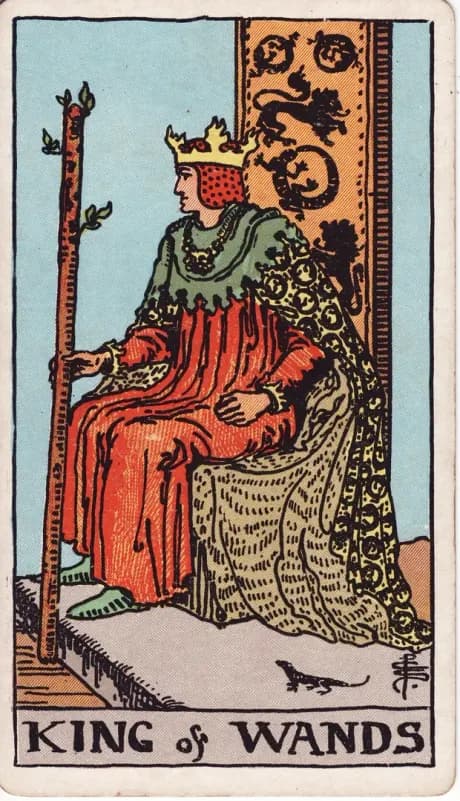
The Knight of Pentacles commits at glacier speed but permanently — patience pays here. The Two of Wands means he's planning a future that includes you. The Hierophant shows traditional commitment values underneath. The King of Wands decides boldly once sure. But the Knight of Wands loves the chase's chemistry, not its conclusion. The Four of Cups can't commit to what he barely notices. And the Eight of Cups means he commits — to leaving when it deepens.
What actually tells you
Commitment shows up as friction accepted, not as affection expressed. The question is never whether he likes the relationship — it is whether he will pay for it.
The clearest sign is that he gives something up. A habit, a Saturday, a person, an option. Nobody commits without cost, and a man who has arranged his life so that being with you costs him nothing has not committed to anything yet, however warm it is.
Second: he makes the relationship visible to people whose opinion he cares about. Family, oldest friends, work. Commitment is partly a public act — it is the difference between having you and being known to have you.
Third: he initiates the difficult conversations rather than surviving them. Someone building something raises problems early because he expects to still be here when they compound. Someone passing through waits for you to raise them and then manages the discomfort.
And the negative sign that matters most: an ongoing, unresolved condition. "Once work calms down", "after this year", "when I've sorted myself out." One of those is a reason. A rolling series of them is a structure, and structures do not resolve.
How long this usually takes
Most people know within six to nine months whether they want to build something with a particular person. That is not the same as being ready to say it, and the gap between knowing and acting is where this question lives.
The honest markers: if nothing has changed structurally by month nine — no shared plans past a season, no integration with his people, no conversation about direction that he started — the odds of spontaneous change are low. Not zero, but low enough that waiting is a strategy with a poor record.
There is a second clock worth knowing about, which is his and has nothing to do with you: age, peer group, the point at which his friends start pairing off. A surprising amount of male commitment timing is social rather than romantic, which is unflattering and useful. It also explains the man who would not commit for three years and was engaged within eight months of meeting someone else.
That last pattern is the one to sit with. It is common, it is real, and it is almost never about the woman who waited being insufficient.
What to do with this
Say what you want once, clearly, with a timeframe attached — and then hold the timeframe. Not as an ultimatum delivered in a fight, but as information delivered calmly: this is what I am looking for, and this is roughly when I need to know.
The timeframe is the part people skip, and it is the only part that works. Wanting commitment without a horizon is indistinguishable, from the outside, from being content with things as they are.
Then watch what happens in the following weeks, and weigh movement over words. Someone who intends to commit responds to that conversation by doing something, usually small and usually quickly. Someone who does not responds by reassuring you and changing nothing, which will feel like progress and is not.
And be honest with yourself about the answer you would accept. If you know you would stay regardless, the conversation will not produce change, because he will hear that too. People are very good at detecting which of their options are real.
What this question usually gets wrong
The first misreading is that commitment is a feeling that eventually gets strong enough. It is a decision, and decisions are made by people who are willing to close options. Waiting for the feeling to reach a threshold can go on for years, because the threshold does not exist.
Second: treating his stated reason as the reason. "Not ready" is usually true and usually incomplete — most people are not ready in the abstract and commit anyway when the specific person makes it worth it. Arguing with the stated reason is arguing with the wrong thing.
Third: reading commitment-avoidance as a wound to be healed by patience. Sometimes it is, and patience helps. More often patience simply removes the pressure that would have forced a decision, and the arrangement continues because it is comfortable.
And the useful thing a spread does here, which conversation often cannot: it separates whether the block is about you, about his own state, or about the relationship's actual shape. Those three look identical from inside the waiting and require completely different responses.
Men reveal their commitment card early and often — the deck just confirms which one you've been dating.
Pull the spread, believe the answer, and price your time accordingly.
Cards in this answer
Questions people ask next
How long should I wait for him to commit?
+
Long enough to have said what you want plainly, plus a few months to see whether anything moves. Past a year with no structural change, you are not waiting for a decision — you are participating in one that has been made.
Is an ultimatum a bad idea?
+
A deadline you will actually keep is not an ultimatum; it is information. What fails is the threat you do not mean, because it teaches him the deadline is negotiable and the next one will be too.
Why do men commit to the next person quickly?
+
Usually timing rather than comparison — readiness arrived, and the next person was there for it. It feels like a verdict on the one who waited. It rarely is one.
Which cards mean commitment?
+
The Two of Cups is mutual choice, the Four of Wands is the public version of it, the Ten of Cups the long arc. The Seven of Cups and the Knight of Swords both say the opposite: many options held open, or motion without landing.