Will We Get Married? Commitment in the Cards
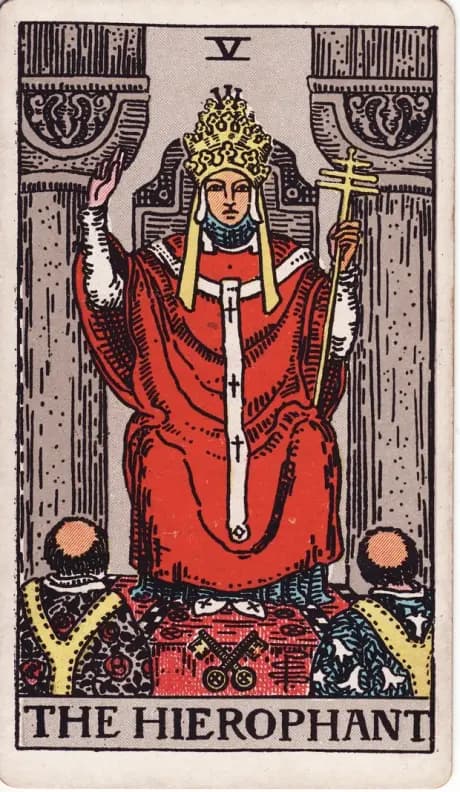
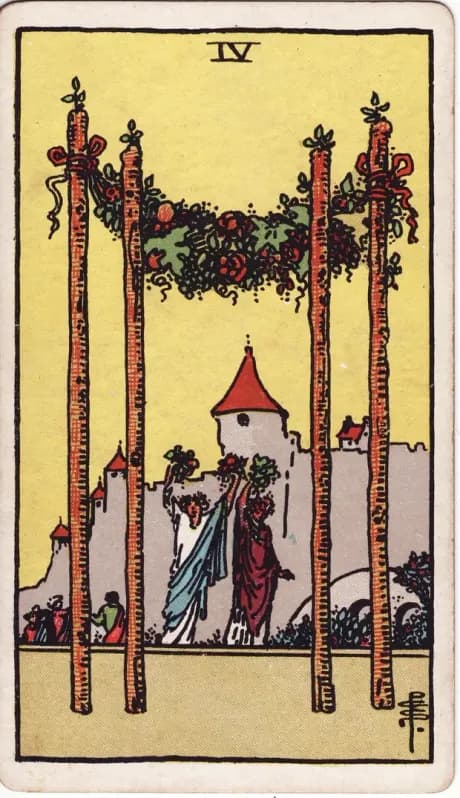
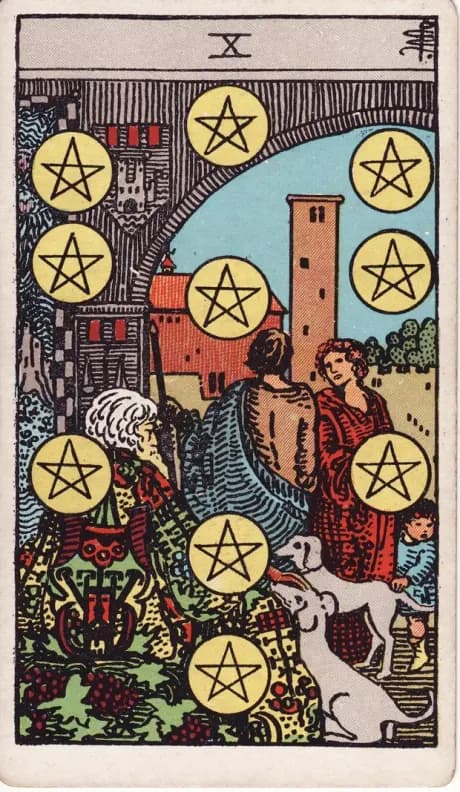
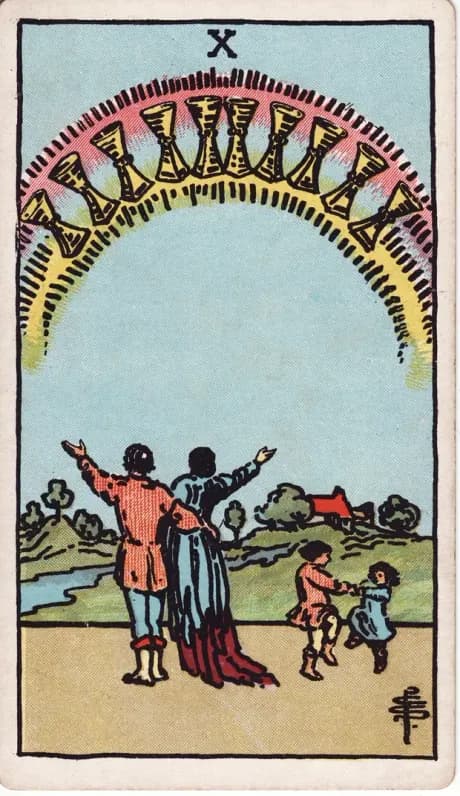
The marriage question is a permanence question, and the deck answers on materials. The Four of Wands, Ten of Cups and Ten of Pentacles say the bond can carry weight. The Two of Swords and Seven of Cups say a decision is being avoided. Timing follows the decision, never the other way round.
Pull my cards on thisCards deal the moment you tap. First reading free, no signup.
The marriage question is really the permanence question: does this bond have institution-grade materials in it? Tarot reads commitment trajectory — whether the relationship is building toward vows, coasting comfortably, or being enjoyed by someone who already knows they'll never file the paperwork. The cards are startlingly clear on this; the hard part is believing them.
Which cards speak to this
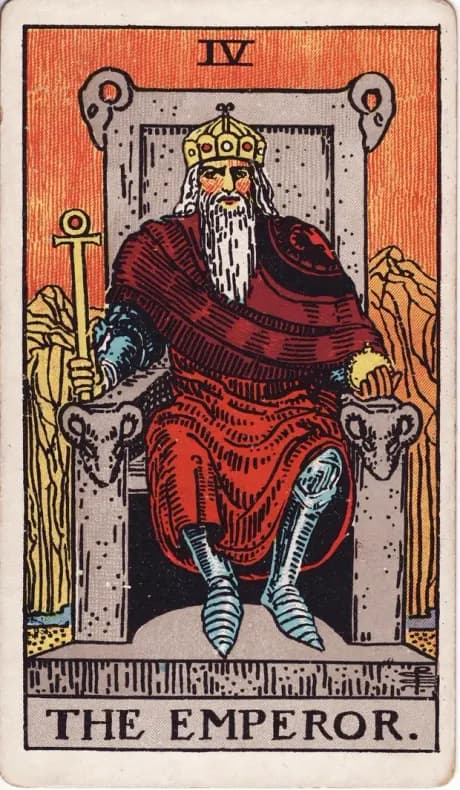
The Hierophant is the wedding card — tradition, vows, witnessed commitment. The Four of Wands celebrates the milestone: proposals and homecomings live here. The Ten of Pentacles builds the family estate — marriage as legacy. The Ten of Cups paints the emotional whole picture. The Emperor brings the structure and the ring budget. Watch for the Two of Wands (planning but not yet moving) and the Hanged Man (suspended indefinitely — ask why).
What actually tells you
Marriage is preceded by logistics, not by romance. The reliable signals are administrative and unglamorous, which is why people miss them while watching for a gesture.
He talks about money in the plural. Joint anything — a lease, a holiday paid for together, a conversation about savings — is a stronger indicator than any amount of talk about the future, because money is where intentions become verifiable.
He includes you in decisions with a horizon longer than the relationship has run. A job in another city, a car, a five-year anything. Being consulted on those is being treated as permanent.
His family treats you as fixed. This one is often visible before he says anything, because families discuss it before couples do.
And the conversational tell: the topic moves from whether to how. Once someone is talking about what kind of wedding they would want, or where they would live, the question you are asking has quietly already been answered — regardless of whether a date exists.
Absent all of these, warm talk about "someday" is a mood rather than a plan.
How long this usually takes
In most Western countries the median run-up is two to five years of relationship before an engagement, and the distribution is wide enough that averages are close to useless for any individual couple. What is more informative is the shape.
Engagements tend to follow a threshold event rather than a period of time: moving in together, a serious illness, a job change that forces a decision about location, one partner's clear statement of what they need. Waiting for a duration to accumulate usually does not work; something has to force the question.
There is a well-worn pattern worth naming: the two-year point and the four-year point are both places where couples either move forward or begin to stall in a way that becomes permanent. If you are past four years with no conversation about it, time is not the missing ingredient.
And a practical note: if you have never discussed whether you both want marriage at all, you are not asking about timing yet. That conversation is the prerequisite and a surprising number of long relationships have never had it explicitly.
What to do with this
Have the conversation about wanting it before the conversation about doing it. Those are different, and collapsing them is why the topic feels so loaded. "Do you see marriage in your life at all" is a much easier question than "are you going to marry me", and its answer determines whether the second question is even relevant.
If you both want it and nothing is moving, name the gap without accusation: what you want, roughly when, and what would need to be true first. Most stalls are logistical rather than emotional, and logistical problems respond well to being said out loud.
Do not hint. Sending a ring photograph, leaving a magazine open, joking about it at dinner with his friends — all of this is asking without asking, and it produces defensiveness rather than movement.
And if the answers keep being warm and vague across years, treat that consistency as data. A pattern of pleasant non-answers is itself an answer, and it is one you can act on.
What this question usually gets wrong
The biggest misreading is that marriage is the finish line rather than a decision about the next decades. Couples who focus entirely on getting there often discover the questions they skipped — money, children, where to live, whose career bends — are all still waiting on the other side.
Second: reading his reluctance as reluctance about you. For a large share of people, hesitation is about the institution, their parents' marriage, or the money, and it survives into a relationship they are entirely certain about.
Third: treating the timeline as a measure of love. Some very committed couples take seven years. Some marry in eighteen months and it means less than the seven-year version. Duration is not depth.
And what a reading can honestly offer: not a date. It can show whether the relationship currently has forward motion or is holding a pattern — and if it is holding, whether the thing holding it is between you or inside one of you. That distinction changes what you do next far more than a predicted year would.
Marriage cards appearing is half the answer — the other half is whether you've both said the word out loud.
If the deck keeps showing vows and he keeps changing the subject, that's also a reading.
Cards in this answer
Questions people ask next
How long do couples usually date before marriage?
+
Commonly two to five years, with enormous variation by country, age and whether you live together. The number is a poor guide for any individual couple; the presence or absence of a shared plan is a much better one.
He says he wants to marry me but never proposes. Why?
+
Most often money, timing anxiety, or an unspoken condition he has not named. Ask what would need to be true first — the answer is usually concrete and often solvable, and the vagueness is what makes it feel hopeless.
Is it a bad sign if we've never discussed marriage?
+
It is a gap rather than a verdict, and it is common in long relationships. It becomes a bad sign only once one of you tries to open it and the other consistently closes it.
Which tarot cards suggest marriage?
+
The Four of Wands is the most direct — the celebration and the public commitment. The Ten of Cups is the long shared life, the Two of Cups the choice itself. The Hierophant speaks to the institution and the vows rather than the feeling.