Why Do I Keep Attracting the Wrong People?
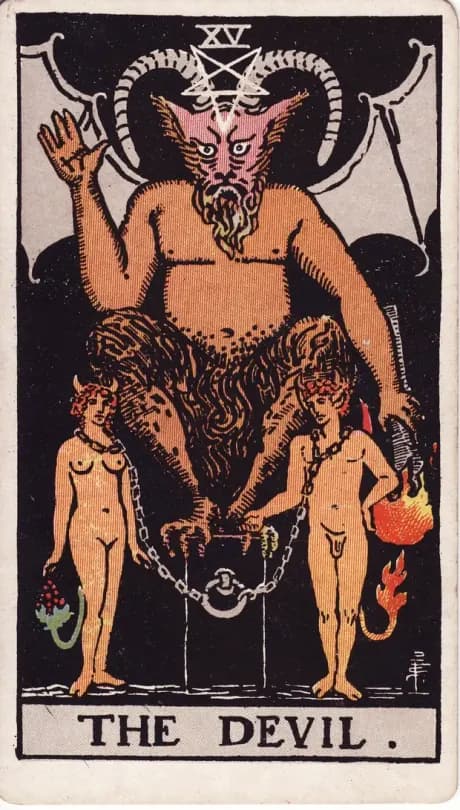
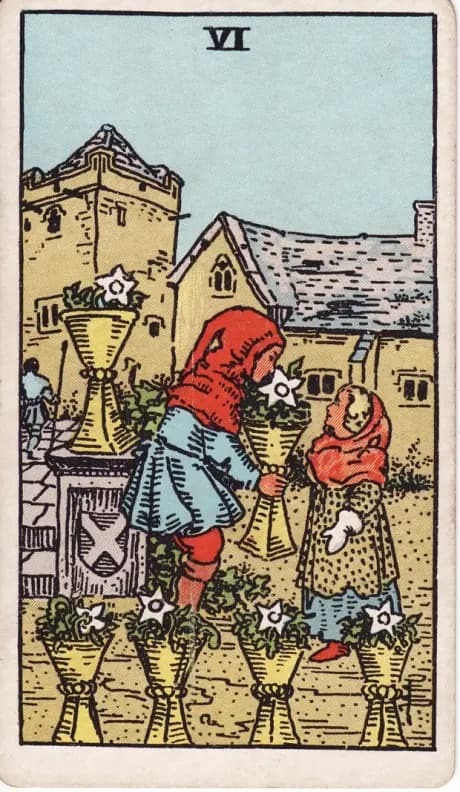
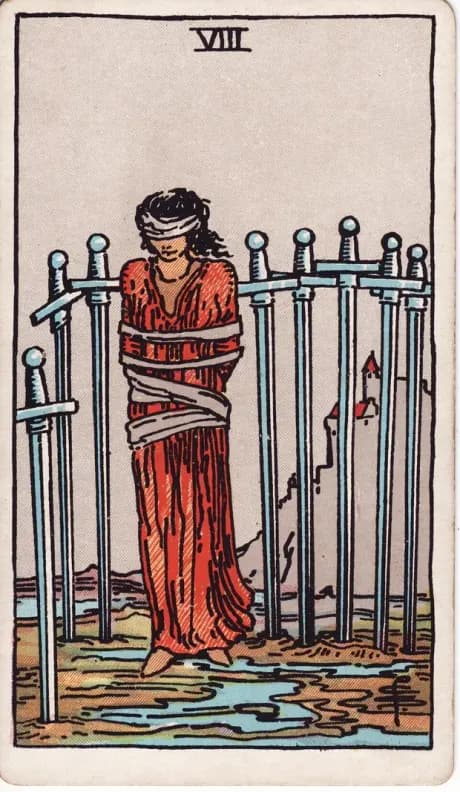
When the same relationship keeps arriving with different faces, the cards stop reading them and start reading you. The Devil names the pattern you are loyal to, the Eight of Swords the belief underneath it, the Six of Cups the original template. The type does not change until the standard does.
Pull my cards on thisCards deal the moment you tap. First reading free, no signup.
If the same relationship keeps happening to you with different faces, the cards stop reading them and start reading the pattern. This is tarot at its most useful: exposing the loop — the familiar wound dressed as chemistry, the red flag that feels like home, the standard that quietly negotiates itself down by the third date. Patterns survive on invisibility. A spread makes them visible.
Which cards speak to this
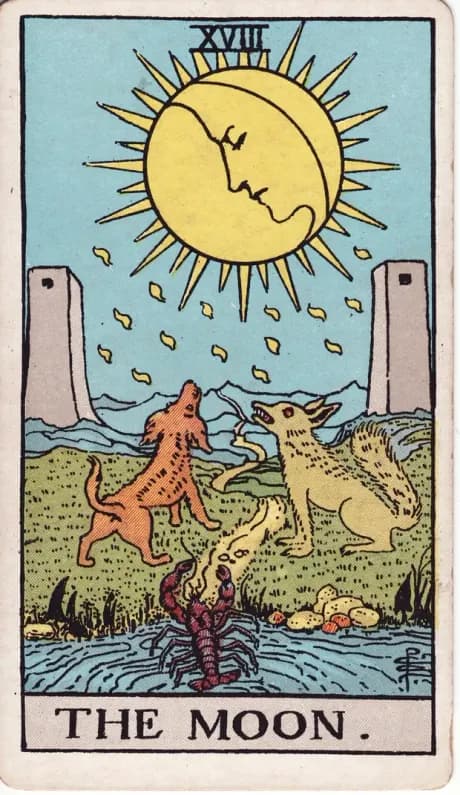
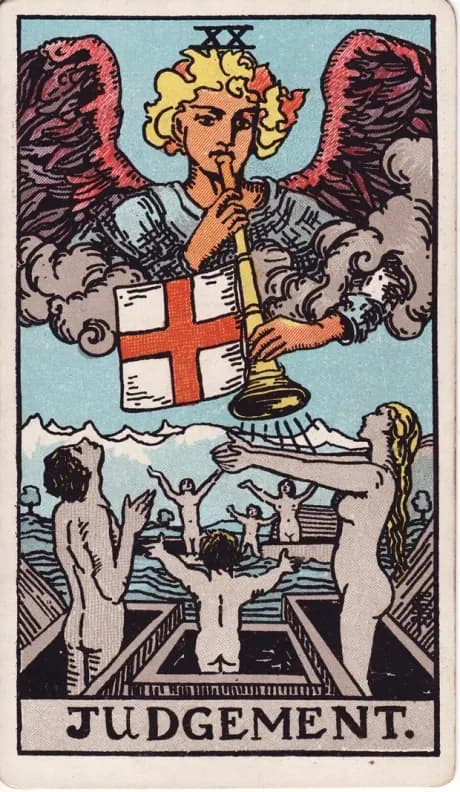
The Devil runs the addiction loop — toxic-but-magnetic on repeat. The Six of Cups keeps choosing the familiar over the good: childhood echoes in adult partners. The Moon shows illusion at the selection stage — falling for projections, not people. The Eight of Swords is the belief-cage: 'this is what I deserve.' Judgement breaks the cycle — the pattern seen, the lesson finally answered. And the Nine of Pentacles is the cure state: whole first, selective always.
What actually tells you
The word "attract" is doing the wrong work. In almost every case the pattern is not who approaches you — it is who you say yes to, and how long you stay after the first evidence.
So the sign to look for is not in them. It is in the timeline: how quickly you knew something was off, and how long you continued anyway. Most people can name the moment. It is usually early, often the first three weeks, and it is almost always overridden by something — chemistry, hope, the fear of overreacting.
Second: notice what the wrong ones have in common. Not their traits — the feeling they produced at the start. If the beginning was always urgent, always intense, always slightly precarious, you are selecting for that state rather than for a person.
Third: check what the right ones felt like. Almost everyone with this pattern has met someone kind and available and found them boring. That reaction is the mechanism, visible in the open. Calm registering as flat is the single most useful thing you can notice about yourself here.
How long this usually takes
Patterns declare themselves in the first month and get confirmed in the third. That is the honest window and it repeats with remarkable consistency.
Weeks one to three are where the early evidence arrives — the small inconsistency, the story that does not fit, the friend's face when you describe him. This is also when it is most easily explained away, because the chemistry is at maximum and the cost of stopping is lowest.
Month three is where it is confirmed and where most people stay anyway, because by then there is something to lose. The gap between knowing and leaving is where the pattern actually lives; it is commonly many months and sometimes years.
Over a longer arc, these patterns tend to break not gradually but at a threshold — usually after one relationship that costs enough to make the cost legible. Waiting for it to fade on its own has a poor record. Doing something deliberate about it has a good one, and the deliberate thing usually starts with noticing week three rather than month nine.
What to do with this
Write the list. Every relationship of significance, and next to each one, the earliest moment you knew. Not the worst moment — the earliest. Almost everyone who does this finds the same signal appearing at the same point each time, and seeing it written down does more than a year of thinking about it.
Then make one rule about that specific signal, in advance. Not a rule about people — a rule about your own behaviour when it appears. Something you can execute without a debate, because in the moment there will be a debate and you will lose it.
Second: practise staying with calm. If steady, available people feel boring, that is a trained response and it can be untrained, but only by deliberately giving those relationships more than three weeks. The flatness usually turns out to be the absence of anxiety, and it stops reading as flatness after a while.
And if the pattern is old and heavy — if it maps onto something from before any of these relationships — that is genuinely worth taking to a therapist rather than a deck. This is one of the few questions where the honest recommendation is a person, not a spread.
What this question usually gets wrong
The first misreading is the word attract. It implies something magnetic and unchosen, which removes the part of the process you control. The available evidence in your own history is about selection and about duration, both of which are yours.
Second: blaming a type. "I attract narcissists" is a common formulation and it usually hides the more useful observation, which is that a particular opening feeling gets trusted. The type varies; the feeling at week two does not.
Third: treating the pattern as a character flaw. It is nearly always a learned association — usually that love and uncertainty belong together — and learned associations respond to deliberate practice in a way that character does not.
And a note on what a reading can honestly do here, because this is the question where it does the most: a spread is unusually good at showing a pattern back to you, because it describes the shape rather than defending your account of it. What it cannot do is the untraining. That part is slow, it is done in real relationships, and it works.
You don't attract the wrong people — you accept them, for reasons the cards are excellent at naming.
Pull the pattern spread once, honestly. It stings for an evening and saves you a decade.
Cards in this answer
Questions people ask next
Why do I always attract the same type?
+
Usually because a particular early feeling — urgency, intensity, slight instability — reads as chemistry, and you say yes to it. The type varies more than the feeling does, which is where the pattern actually lives.
Why do nice people feel boring to me?
+
Because calm reads as flat when your nervous system has learned to associate love with uncertainty. It is a trained response, it is common, and it fades if you deliberately give those relationships longer than a few weeks.
Is it my fault?
+
Fault is the wrong frame. The pattern was learned, usually early and not by choice. What is yours is the part that comes next, and it is more within reach than it feels.
Which cards show a repeating pattern?
+
The Devil for an attachment that has become compulsive, the Eight of Swords for feeling trapped by something you are partly holding, the Moon for a story you cannot see clearly, and the Wheel of Fortune for a cycle that keeps returning.