What Judgement means in tarot — and in love
Judgement is the wake-up call in love: an honest reckoning with the past, a rebirth of something dormant, the moment you finally see your patterns and… As feelings, Judgement means you triggered their self-review — around you they reassess their choices, their patterns, what they actually want.
Jump to FAQAt a glance
- Yes or no
- Yes — reversed flips it
- Upright, in a line
- a wake-up call, rebirth, an honest reckoning
- Reversed, in a line
- self-judgment, ignoring the call to change
Want a yes or no on your own situation rather than this card? Pull one card and get the verdict with the reason behind it.
Ask your own yes-or-no questionUpright in love
Judgement is the wake-up call in love: an honest reckoning with the past, a rebirth of something dormant, the moment you finally see your patterns and outgrow them. Old lovers resurface; old selves get retired. If you asked about second chances — this card holds the trumpet. But the revival only counts if both people rise as upgraded versions.
The reckoning it describes almost never arrives as new information. It arrives as old information you can finally read without arguing with it. You knew the pattern. You could probably have described it two years ago if someone had asked in the right way. What changes under this card is not what happened but your willingness to look at it straight.
In a new connection it usually means the person in front of you is standing where someone else used to stand, and you are comparing without meaning to. That goes one of two ways. You notice the old shape early and decline it, which is the card working. Or you notice it late and call it fate, which is the card being ignored. Judgement does not predict which one you will do. It only says the recognition is available now, at a point where it still costs you almost nothing.
In an established bond it is the accounting that has been postponed. Not a fight. An accounting. Both people put down what they have actually been carrying, including the parts that make them look bad, and the thing gets judged on what is really in it rather than on the version each of them has been defending. Couples survive this far more often than they expect. What they rarely survive is another year of not doing it.
What the card asks for is specific and unglamorous: say it out loud, to the person it concerns, while it is still daylight. A reckoning you conduct alone in your head is a rehearsal. Here the trumpet sounds and the figures stand up, and standing up is a physical act. Deciding to stand up later is the reversed card.
Reversed in love
Reversed, Judgement is the call ignored: staying deaf to the lesson, judging yourself without parole, or replaying the past instead of answering its actual message. Self-forgiveness is the exit. You can't start the new chapter while prosecuting yourself for the old one — close the case, keep the wisdom.
The reversal does not mean the call never came. It means it came and nothing moved. That is the particular damage here: not a wrong turn but a stalled one, and stalls are harder to notice than mistakes because nothing visibly goes wrong.
The most common form is self-prosecution. You have identified the fault, named it accurately, and then stayed in the courtroom going over the same file. This feels like accountability and functions as avoidance, because a person busy convicting themselves is not available to do anything differently. The tell is repetition. Insight that keeps arriving in the same words has stopped being insight and become a habit.
The second form is replaying instead of answering. The past gets revisited endlessly for feeling rather than for information — the same conversation reconstructed, the same message reread. The card reversed says the material has already given you everything it holds. Going back a hundredth time produces nothing the ninety-ninth did not.
There is also the version where somebody else is the one refusing the call. They know what went wrong, they can even describe it, and they will not act on it. You cannot answer a summons on another person's behalf. That sounds harsh and it is the most useful line on this card.
The exit is forgiveness with a limit on it. Not absolution in general, which is too vague to hold on to. One specific thing, named, released, kept as knowledge. Then the next chapter is allowed to start.
Judgement As feelings
As feelings, Judgement means you triggered their self-review — around you they reassess their choices, their patterns, what they actually want. Feelings here are serious and transformative rather than light. You're a turning point, not a pastime.
That is the headline, and it needs breaking down by situation, because a turning point feels very different depending on where the two of you are standing.
If you are single and asking about someone new. They are taking you seriously, possibly more seriously than they are comfortable with. The card here means you have interrupted something — a run of casual choices, a story they told themselves about what they wanted. The feeling is real and it comes with weight. It may also come slowly, because a person in the middle of reassessing anything is not quick.
If you are in a relationship. They are reviewing it. That is not automatically bad news and it is not neutral either. Judgement in this position means they have stopped running on habit and started asking whether this is the thing they want to keep building. Most people who reach that question and stay, stay properly. The risk is finding out about the review only after it has concluded.
If you are asking about an ex. They have understood something about what happened, and the understanding includes their own part in it. This is the card that most often comes before a real message rather than a careless one. It does not say they want to return. It says they can finally see the thing clearly, and clarity moves people in both directions.
If you are asking about someone long-term. They are measuring the life you have built against the life they meant to build. Judgement is not restless the way other cards are; it is not looking for novelty. It wants the account to balance. Long bonds meet this card two or three times, and each time it gets answered rather than dodged, they get sturdier.
In all four the constant is seriousness. Whatever they feel about you, they are not treating it as small.
Judgement For your ex
For an ex, Judgement is the classic resurrection card: renewed contact, re-evaluated history, a genuine second-chance window. It works only as rebirth — two people answering the lesson, not two people muting it together.
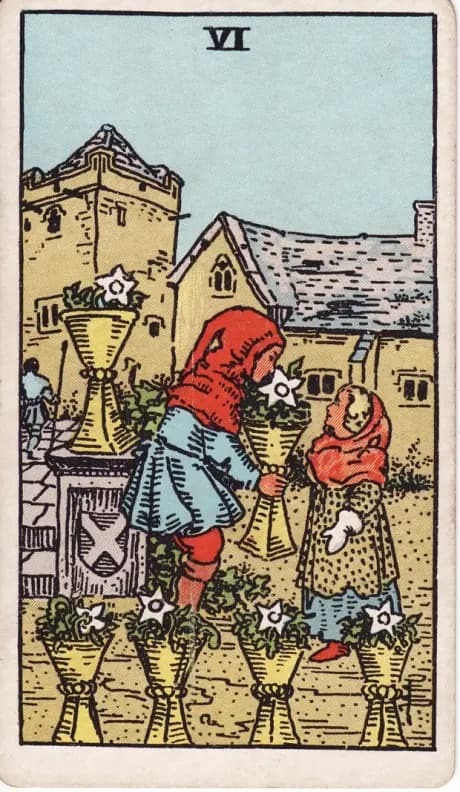
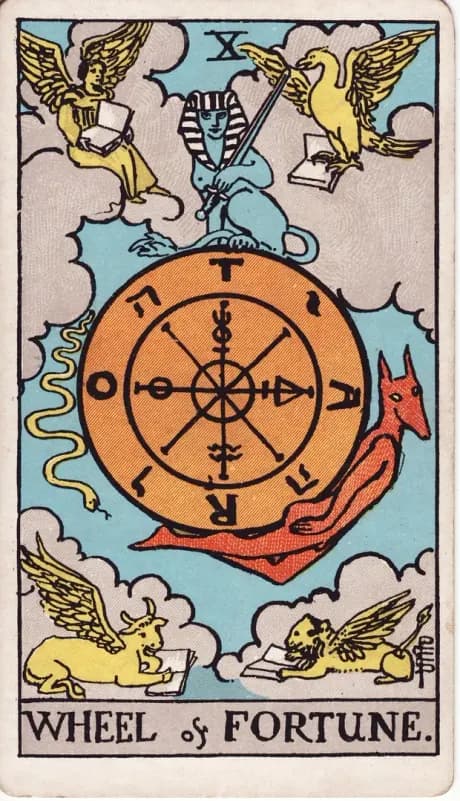
What separates this card from the other return cards is the condition written into it. The Six of Cups brings someone back for nostalgia. The Wheel of Fortune brings them back by circumstance. Judgement brings them back because they worked something out, and if they did not work something out, the card is not really in play no matter what the contact looks like.
The practical test is whether they can say what went wrong in a sentence that includes themselves. Not an apology in general terms. A specific account: this is what I did, this is what it cost you, this is what I understand now. People who have genuinely answered the trumpet can do this and are often relieved to. People who have not will produce warmth, regret and no detail, and the warmth will be sincere, which is what makes it confusing.
There is a second reading that gets missed. Judgement often marks your own reckoning rather than theirs — the point where you stop rehearsing the relationship and can look at it whole, including the parts you edited out while it hurt. That version of the card ends contact rather than restarting it, and it is not a worse result. A matter closed properly and a matter reopened properly are the same card doing the same job.
What Judgement means in general
Judgement is card twenty of the Major Arcana, and it does something none of the cards before it does: it asks for a response. An angel sounds a trumpet, the dead stand up out of their coffins, and the picture stops there. Whether they walk is not shown.
The subject is the moment when accumulated facts become legible and demand an answer. A summons, a verdict, a calling. It covers self-assessment that is honest for once, an old matter reopened on better terms, absolution given or claimed, and the particular clarity that arrives when you stop defending a version of events.
Upright it says the call is genuine and the timing is now. Something finished may return in a form that can actually be settled this time. Reversed the summons is heard and ignored — a verdict deferred, a lesson taken as punishment rather than as instruction, or self-prosecution doing the work that change was supposed to do.
Outside private matters the card keeps its shape. In work it is the appraisal, the post-mortem, the shelved project that turns out to have been right and can be restarted with what you know now. It is also vocation in the older sense: a line of work that feels less chosen than answered. In money it is the reckoning of what a habit has actually cost, arriving as a number instead of a mood. In creative life it is the archive — going back through old material and finding one piece that was always finished and never shown.
The distinction worth holding is between assessment and condemnation. The card is an evaluation, not a sentence. The trumpet does not tell anybody what they are. It tells them to get up.
Judgement as a yes or no
As a yes or no, Judgement upright is a yes with one condition written into it: the answer becomes yes when you answer it. This is the card of a summons, and a summons that nobody responds to changes nothing. So the honest phrasing is that the door is open and it will not open itself any further.
That makes it a stronger yes than it sounds. Most yes cards describe conditions arriving from outside — the Sun, the Star, the Ace of Cups. Judgement describes permission plus a required move. If the question was whether something is possible, whether the timing has come, whether an old matter can be reopened, the answer is yes and the answer is now.
Reversed it is a no, and the reason is worth stating plainly. Reversed Judgement is not a refusal from the world. It is a call left unanswered, by you or by the other person. Nothing here has been ruled out. It has simply been left, and left long enough that leaving it has become the answer.
There is one class of question where this card resists the format. If you asked whether someone will change, Judgement will not tell you. It tells you the opportunity to change is present and legible, which is a fact about the moment rather than a fact about the person. A better question is what specifically would have to be different before you believed it, and whether that thing has happened yet. The deck answers that one well.
Judgement as advice
As advice, Judgement says do the accounting and then act on it where somebody can see. Both halves are required. The card's most common failure is a person who has done a great deal of honest internal work and changed nothing another human being could observe.
Concretely that means three things. Write the pattern down in one sentence, in plain language, without softening it. Say it to the person it concerns, if it concerns a person. Then do one thing that would be impossible if the pattern were still running — decline the message you would have answered, make the call you have been avoiding, end the arrangement that only works because nobody has looked at it directly.
The card also advises a particular kind of forgiveness, and the emphasis matters. Forgive the specific act, not yourself in general. General self-forgiveness tends not to hold, because there is nothing in it to hold on to. A named thing, released on a named day, is something you can point back to when the guilt returns, and it will return.
If an old matter prompted the reading, the advice is to reopen it once, properly, with a limit. Not to leave it standing open indefinitely. Judgement is a moment, not a condition.
What the card does not advise is waiting for certainty before responding. The figures on it are not certain. They are standing up in the middle of a scene they do not yet understand, which is the only way anybody has ever stood up.
Judgement as an outcome
As an outcome, Judgement is a situation that ends in a decision — not a drift, not an expiry, but a point where the accumulated facts are finally looked at and something is settled. Whatever you asked about resolves, and it resolves through recognition rather than through events.
That usually looks like one of two endings. Either something dormant is revived on terms that are genuinely new, or something is finished properly for the first time, with both people understanding why. Judgement is one of the few outcome cards that can deliver either result and be equally itself, because its subject is the clarity, not the direction the clarity points in.
It also tends to arrive faster than people expect. Cards like the Seven of Pentacles describe slow ripening. This one describes a threshold: nothing, nothing, and then the whole situation is legible at once, often set off by something small — a sentence, a photograph, an ordinary Tuesday.
Reversed as an outcome is the weaker result, and it is specific. The situation does not end badly. It does not end. The call sounds and everyone stays lying down, which means the same set of facts will be presented again later at a higher price. Delay is the entire content of the reversed outcome.
If you want a marker to watch for, it is a change in how the story gets told. When the version you tell of what happened starts including your own part without flinching, the outcome has already begun.
What the Judgement card shows
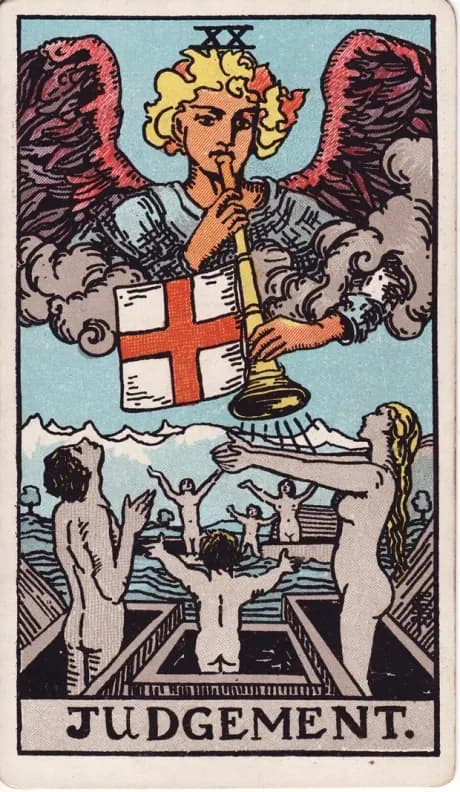
The 1909 card is built in two halves. In the upper half an angel leans out of a bank of grey cloud and blows a long golden trumpet. The wings are spread wide and the face is calm rather than fierce, which matters: this is a messenger, not an executioner. From the trumpet hangs a square white banner marked with a red cross of equal arms.
Below, three grey figures rise out of open coffins floating on flat grey water. A man stands on one side, a woman on the other, and between them a child, drawn from behind so you cannot see the child's face. All three have their arms lifted and their palms open. Nobody is being pulled up. The gesture is theirs.
Further back, more figures rise from more coffins on the horizon, small and repeated, which turns a private moment into a general one. Behind them a range of snow-covered mountains closes the scene.
Several details carry the meaning. The coffins are already open before the trumpet is heard — the card does not show the moment of release, it shows the moment of response. The figures are naked and uniformly grey: rank, age and beauty have all been removed, so there is nothing left to be assessed on except the life itself. The child faces away because a beginning has no face yet.
The water is grey and almost featureless. It is not a landscape anybody could stand in. Coffins on a sea are already a picture of a life that has been let go of, and Smith puts them there before she puts anyone in motion.
And the trumpet only sounds. It gives no instruction, names no verdict and points at nobody in particular. What the figures do next is not drawn.
Frequently asked
Does Judgement mean an ex is coming back?
+
It is the strongest revival card in the deck, so reappearance or reconciliation is genuinely on the table. The condition is what makes it different from other return cards: it works as version two, never as a rerun. The test is whether they can name their own part in what went wrong. Warmth without that detail is not this card.
What does Judgement mean in love?
+
An awakening. You see the truth of the situation, including your own pattern inside it, and something is reborn or retired on the strength of that. Old connections can resurface. What ends is the version of you that kept repeating the same arrangement, and the card only counts if the seeing turns into a visible change.
Is Judgement a yes or a no?
+
Upright it is a yes, conditional on your answering it — the opportunity is present and it will not act on its own. Reversed it is a no, and specifically the no of a call that was heard and left unanswered. Nothing has been ruled out; it has just been left long enough that leaving became the decision.
What should I do when I draw Judgement?
+
Write down in one plain sentence the pattern you have been avoiding naming, then say it out loud to the person it concerns and do one thing that would be impossible if the pattern were still running. Internal reckoning that changes no observable behaviour is the reversed card, not the upright one.
Is Judgement a karma card?
+
People read it that way, and the useful part of that reading is the idea of consequences becoming legible. The unhelpful part is punishment. Judgement is an assessment, not a sentence, and the picture backs this up: the angel sounds a trumpet and points at nobody. Nothing on the card is being condemned. Everything on it is being invited to stand up.