How Does He Feel About Me, Really?
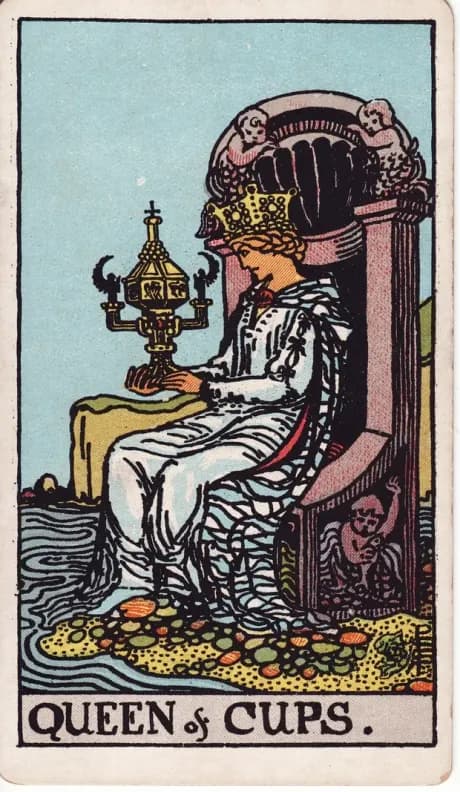
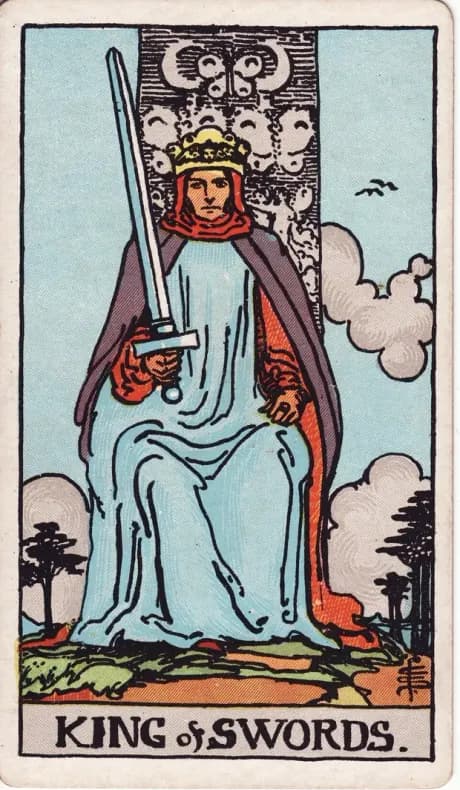
Behaviour and feeling are two separate readings, and the gap between them is where the pain lives. Cups cards show what he feels, Swords show what he tells himself about it, Pentacles show whether he will do anything with it. The cards give you the honest version, not the flattering one.
Pull my cards on thisCards deal the moment you tap. First reading free, no signup.
Behavior is encrypted; tarot is the decryption key. The gap between how he acts and what he feels is where most relationship anxiety lives — and it's exactly the gap the cards read. Feelings cards show the emotional truth under the performance: the crush behind the coldness, the doubt behind the charm, the depth behind the memes.
Which cards speak to this
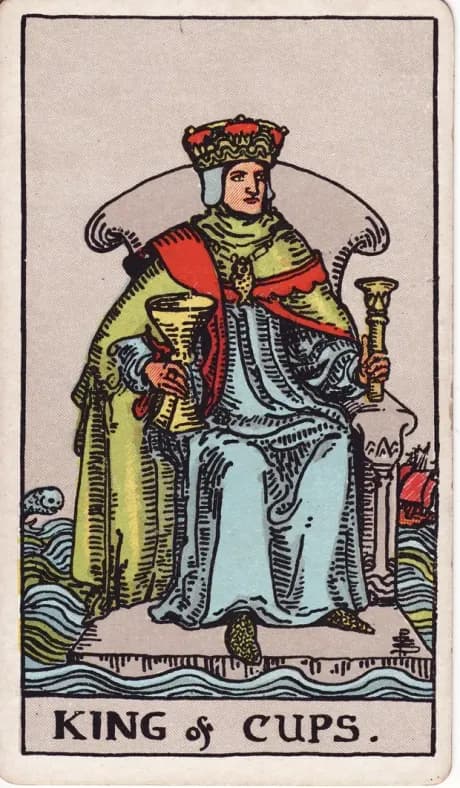
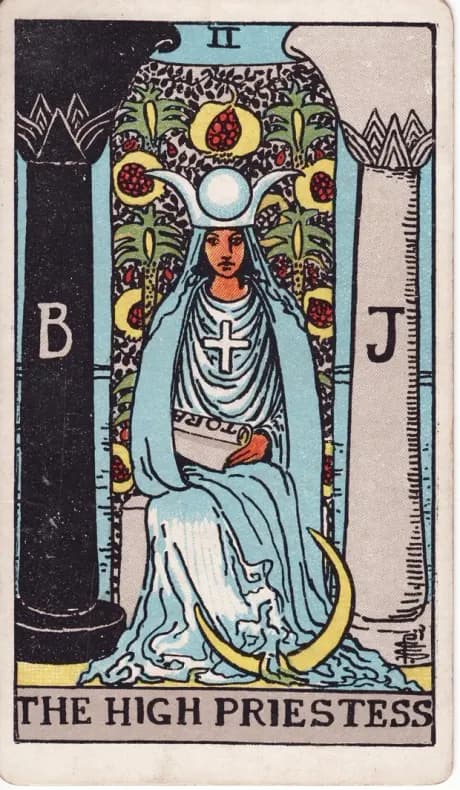
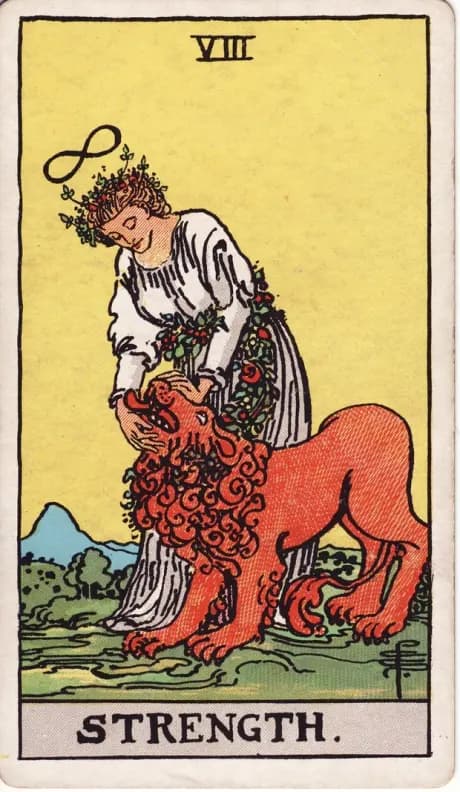
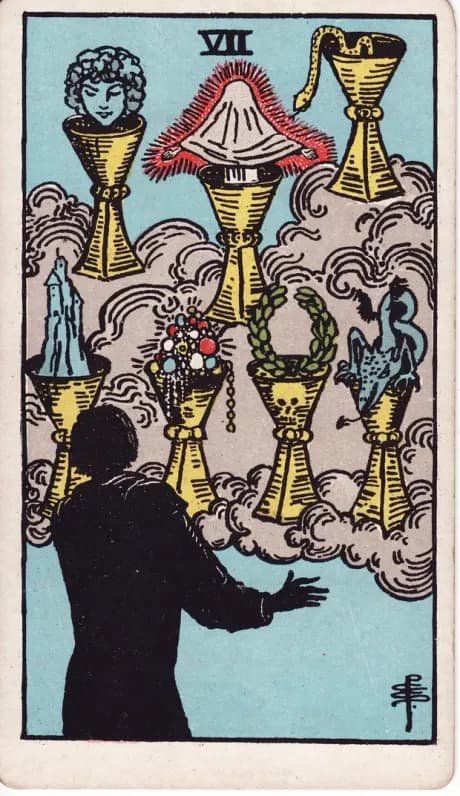
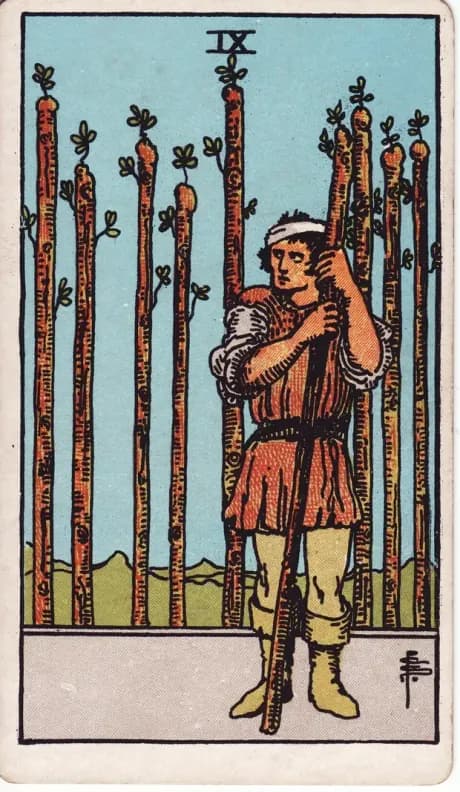
Court cards are feeling-portraits: the King of Cups holds deep devotion calmly, the Knight of Wands burns loudly, the Page of Cups crushes shyly. The High Priestess means feelings hidden below the waterline. Strength says you calm something in him no one else does. The Seven of Cups means he's dazzled but unfocused. The Nine of Wands: feelings guarded behind old scar tissue.
What actually tells you
Feelings are hard to read directly and easy to read sideways. The sideways evidence is more reliable than anything he tells you in a good mood.
Watch what he does with information about you. Someone with real feeling retains and returns it — he brings up the thing you were worried about, unprompted, days later. Someone without it responds warmly in the moment and retains nothing, which reads as attentive and is not.
Watch what he protects. People guard what they value: his time with you, his sense of you in front of others, the way your name is used in the group. Indifference is not hostile — it is simply unprotective.
Watch the direction of effort over time. Feeling that is growing produces slightly more effort each month; feeling that is fading produces the same effort, then slightly less, while the words stay identical. Words are a lagging indicator and behaviour is a leading one.
And the tell that cuts through most ambiguity: whether he seeks your reaction. Wanting to know what you think about something unrelated to the relationship is the most ordinary sign of mattering there is.
How long this usually takes
Feelings have a shape over a relationship's life, and knowing the shape stops you misreading a normal phase as a verdict.
The first six to ten weeks are unreliable in both directions — everything is amplified, and nothing that happens in them predicts much. Somewhere between month two and month four there is a settling, and it very often reads as cooling. It usually is not; it is the end of novelty and the beginning of an actual assessment.
Around six months to a year, feeling either converts into structure or stops moving. That conversion is the thing to watch. If nothing about how he arranges his life has changed by then, what you have is a stable fondness, and it can stay stable for years without going anywhere.
Within a single week the variation is enormous and means very little. If you are trying to read his feelings from the last four days, you are reading his workload.
Ask instead what the trend has been over three months. That question has an answer, and you already know it.
What to do with this
Ask him — but ask a better question than the one in your head. "How do you feel about me" invites reassurance, and reassurance is easy to give and worth nothing. "What do you want this to be in six months" invites a position, and a position is information.
Before that, do one honest audit. Write down what you know he feels from things he has done, not things he has said, over the last month. Most people find the list is either clearly warm or conspicuously empty, and either way the ambiguity they have been living in was not really in the evidence.
If the audit and the words disagree, believe the audit.
And notice the cost of asking this question repeatedly of everyone except him — of friends, of the internet, of a deck. Each of those gives you a version of an answer that lets you stay exactly where you are. The one source that could end the uncertainty is the one people avoid, and usually for a reason worth looking at.
What this question usually gets wrong
The biggest error is expecting a single answer. Feelings are not a scalar. He can want you, not want a relationship, feel guilty about that, and enjoy your company entirely genuinely — all at once, all true. Insisting on one verdict forces you to discard most of the evidence.
Second: treating his behaviour under stress as the real him. It is not more true than the rest; it is one input. People withdraw for reasons that have nothing to do with the relationship, and reading every quiet fortnight as a message produces a permanent state of alarm.
Third: assuming he knows. A large number of people cannot describe their own feelings with any accuracy, and asking them produces a sincere answer that is simply wrong. This is why behaviour outranks self-report.
And the limit of the tool, plainly: tarot does not read another person's interior. What it reads well is the shape of the thing between you — where it is stuck, what is unspoken, which direction it is drifting. That is usually the real question hiding inside this one.
The cards read his feelings; only his choices spend them.
Pull the spread for insight — then weigh it against what he does with an entire week. Feelings without behavior are just weather.
Cards in this answer
Questions people ask next
Why does he act differently in private and in public?
+
Most often it is about his own image rather than about you — the private version is real and the public one is managed. It stops being harmless when the private version is the only one you are ever offered.
He says he likes me but doesn't make plans. What does that mean?
+
That he enjoys you and has not decided anything. It is one of the most common states there is and it is stable — it will not resolve on its own, because nothing about it is uncomfortable for him.
Can someone have feelings and still pull away?
+
Yes, and it is common. Withdrawal is usually about his own capacity rather than about the strength of the feeling. It matters anyway: a feeling that cannot survive contact is not much use to you.
Which cards show how someone feels?
+
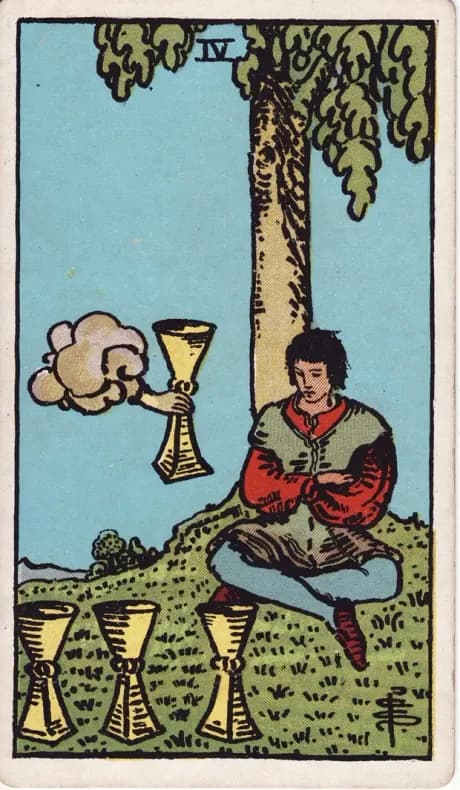
Cups cards read feeling most directly — the Two for mutual pull, the Knight for an offer being made, the Four for someone present but disengaged. Swords cards here usually mean the feeling is being thought about rather than felt.