Am I Wasting My Time? The Cards Answer
If you are asking, something has already told you. Tarot will not settle it for you, but it is good at separating what you are actually getting from what you are hoping for — and that distinction is usually where the answer has been sitting.
Pull my cards on thisCards deal the moment you tap. First reading free, no signup.
Nobody asks this in a relationship that is working. The question itself is data, and it is worth taking seriously before any card is turned. What follows is not permission to leave or a reason to stay. It is the honest set of things that distinguish a slow start from a dead end, because those two feel identical for a surprisingly long time and only one of them is worth the months.
Which cards speak to this
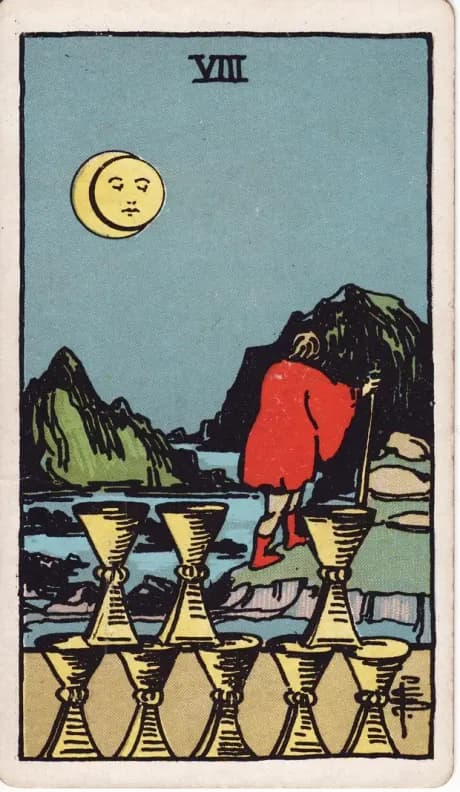
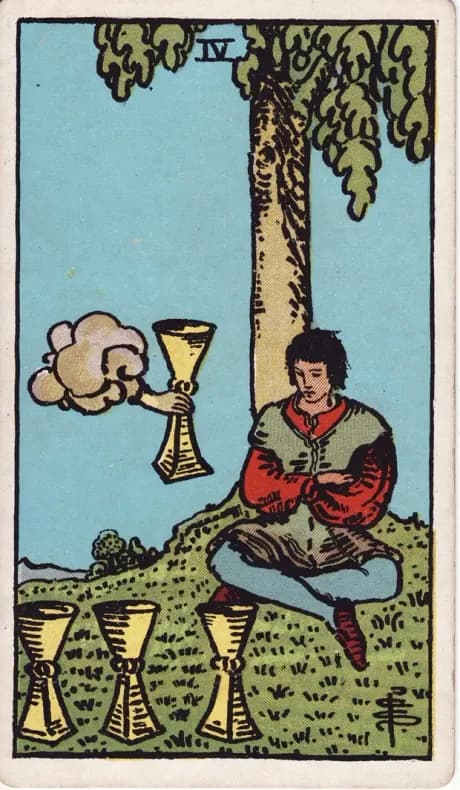
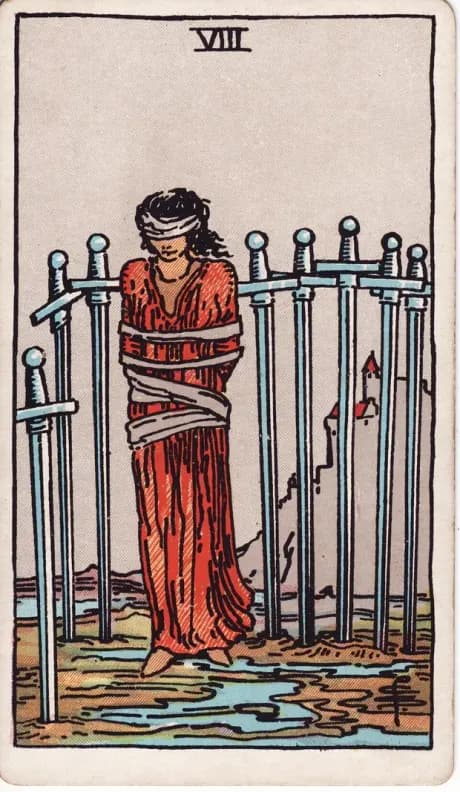
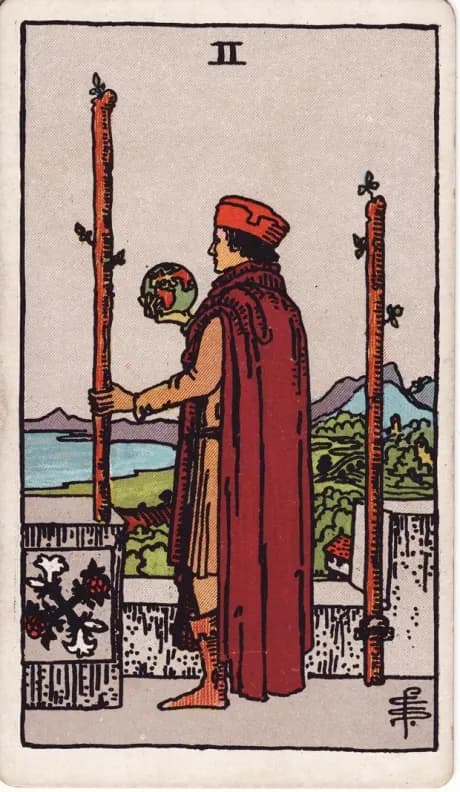
The Eight of Cups is the walk-away card and the most direct answer to this question: something has been outgrown and part of you already knows. The Four of Cups says what is on offer is not enough and you have stopped being able to see it clearly. The Eight of Swords describes feeling trapped in something you are partly holding closed. Against those, the Two of Wands says a decision is genuinely still open, and the Star says there is something real here that has not had time yet.
What actually tells you
The clean test is whether anything has changed. Take the last three months and ask what is different — not in feeling, in fact. If you cannot name anything, you are not early, you are level.
Second: whether the effort is matched. Not equal in style, matched in weight. One person carrying the arranging, the initiating and the emotional maintenance for a season is the most reliable signal there is, and it is the one people explain away most.
Third: whether the good parts are shrinking or the bad parts are growing. Both are endings; they just feel different. The first is quieter and takes longer to notice.
And the sign that this is not a waste: difficulties that are being worked on by both of you, out loud, with visible clumsiness. Repair in progress looks messy and predicts well. Smooth, pleasant stasis predicts badly, which is counter-intuitive and worth sitting with.
How long this usually takes
There is a reliable and unflattering pattern: the gap between knowing and acting averages several months, and in longer relationships more than a year. Almost everyone who leaves reports having known well before they moved.
Which makes the useful timeline a personal one. If you have been asking this question for more than about eight weeks, the asking has become the state rather than a phase, and states do not resolve themselves.
Give it a defined test instead. Pick the one thing that would have to change, say it once, and give it six to twelve weeks. That is long enough for a genuine attempt and short enough that you have not spent a year finding out.
And be honest about how many of these periods there have already been. The count of previous attempts is more predictive than anything about the current one, and nobody counts it because counting it decides the question.
What to do with this
Write down what you are getting, in the plainest possible terms — not what you hope for, not what it could be. Then read it as though it were someone else's list. Most people find that the gap between the list and the feeling is the whole problem, and that it does not survive being written down.
Then say the thing you have not said, once and clearly, to him. Not as an ultimatum — as information. Almost every version of this question contains something unsaid, and a fair share of these situations change the moment it is spoken.
Set a date for yourself and put it somewhere you will see it. Not a deadline for him; a point at which you will look again with fresh eyes. Open-ended uncertainty is what makes this painful, and a horizon fixes most of that without requiring anything of anyone else.
And notice how much of your week this occupies. That number is the actual cost, and it is the one thing here that is unambiguously yours.
What this question usually gets wrong
The first misreading is that this question needs an outside verdict. It almost never does. People who ask it can usually describe their own situation accurately in two sentences when pressed, and what they are looking for is not information but the standing to act on what they already know.
Second: reading the question as unfair to him. Wondering whether something is working is not a betrayal of it. Relationships in which that thought cannot be entertained are held together by a rule rather than by choice.
Third: waiting for the situation to get bad enough to be obvious. Most of these never do. The common ending is not a disaster but a slow attrition that stays permanently just tolerable, which is precisely why it can run for years.
And the honest limit of the tool: a spread will not hand you a verdict, and one that appears to is reflecting what you brought. What it does well is describe what is actually present — what you are receiving, what has stalled, what you have been carrying by yourself. The decision stays yours, which is the only place it has ever been.
If a friend described your last three months exactly as you have lived them, what would you tell her?
That answer is available right now and it is almost always the one you already have.
Cards in this answer

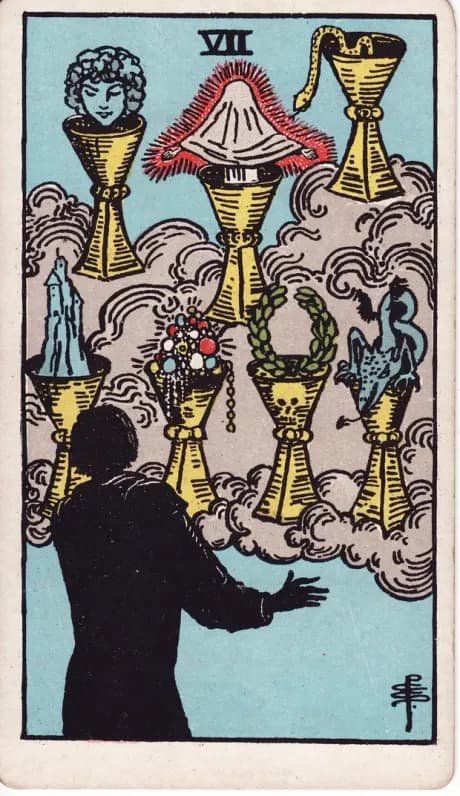
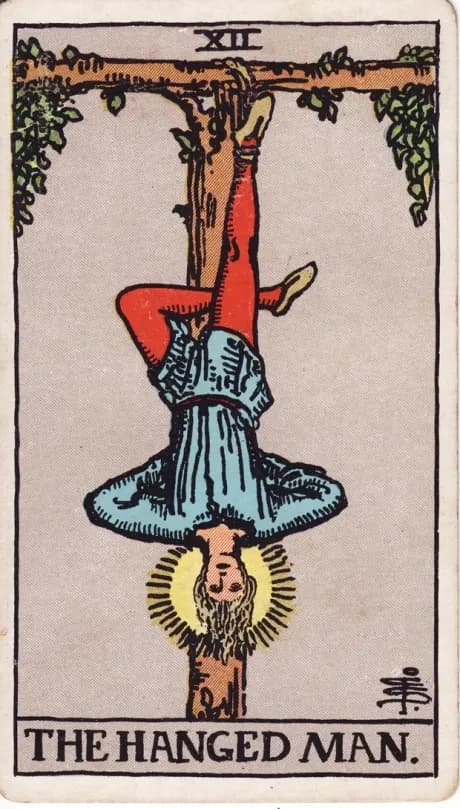
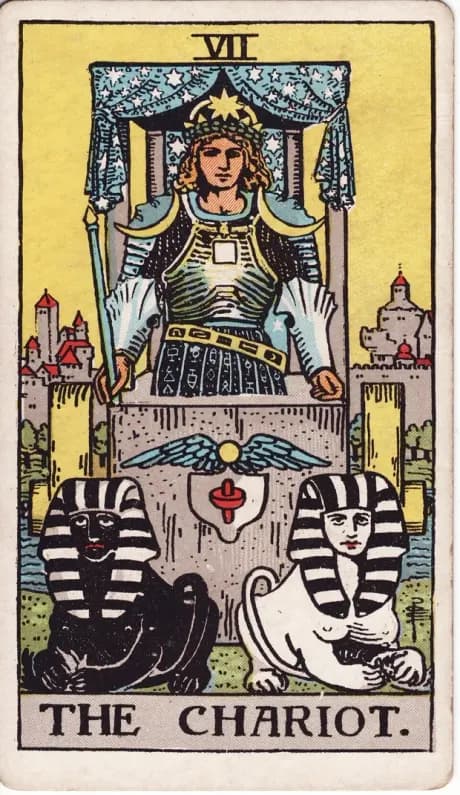
Questions people ask next
How do I know if it's a rough patch or the end?
+
A rough patch has two people naming it and trying, however badly. An ending has one person managing and the other comfortable. The presence or absence of shared effort separates them better than how bad it feels.
Why can't I just leave?
+
Usually because leaving requires certainty you will never have, and because the good parts are real. Both are legitimate. Neither improves with more waiting.
Is asking this a sign I should go?
+
It is a sign something needs addressing, not necessarily a sign to leave. What matters is what happens after you say it out loud — that response is far more informative than the question.
Which cards mean it's time to walk away?
+
The Eight of Cups is the clearest — leaving something that was real and is finished. The Four of Cups and Eight of Swords both describe being stuck rather than done. The Two of Wands says the decision is still genuinely open.