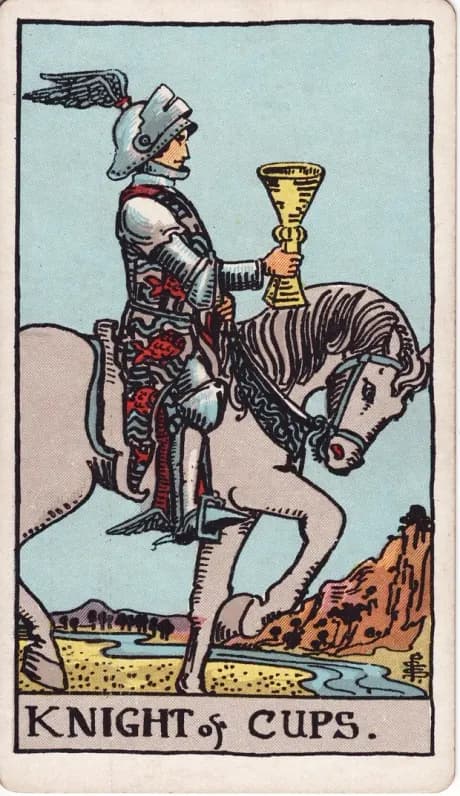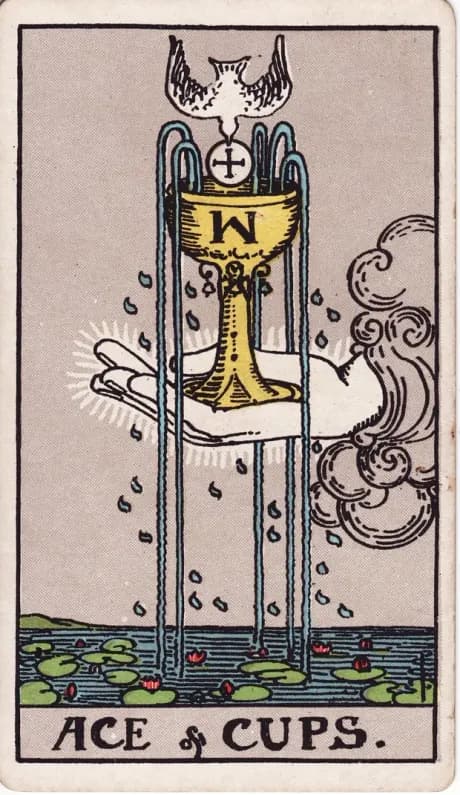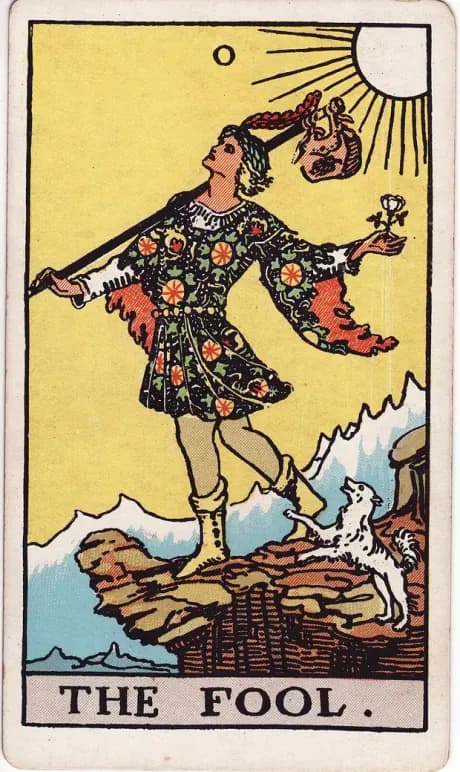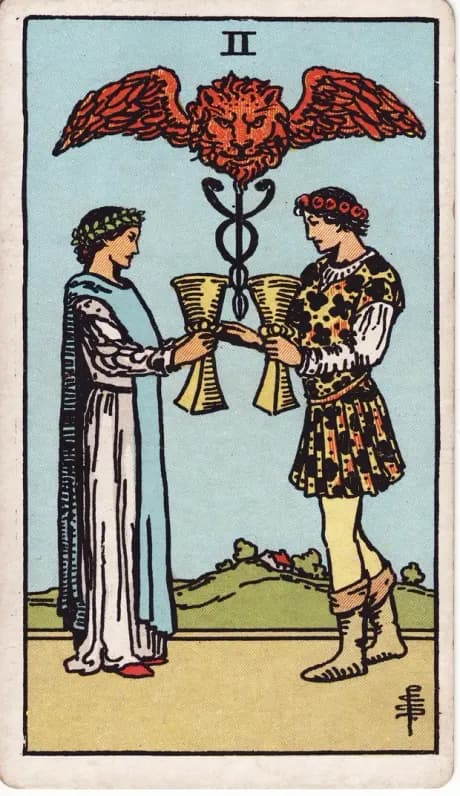
What Page of Cups means in tarot — and in love
The Page of Cups is the sweet surprise: an unexpected message, a shy confession, feeling arriving with the awkward sincerity of a first crush. As feelings, the Page of Cups means a crush in its purest form: fluttery, idealising, slightly clumsy.
Jump to FAQAt a glance
- Yes or no
- Yes — reversed flips it
- Element
- Water
- Upright, in a line
- a sweet message, playful new feelings
- Reversed, in a line
- emotional immaturity, mixed signals
Want a yes or no on your own situation rather than this card? Pull one card and get the verdict with the reason behind it.
Ask your own yes-or-no questionUpright in love
The Page of Cups is the sweet surprise: an unexpected message, a shy confession, feeling arriving with the awkward sincerity of a first crush. It often carries romantic news — someone younger, or young-hearted, making a gentle move. If you asked whether they will reach out, this Page literally carries mail. Receive the tenderness without mocking how clumsy it is.
The scale of the card matters. Pages are beginnings, and this one describes an opening rather than an outcome. Something starts: a message, an admission, a first unguarded sentence. What happens after that is not in the picture and should not be read into it. People routinely draw this card and construct an entire future from a single overture, which is precisely the mistake the card is illustrating rather than endorsing.
In a new connection it describes someone approaching without a strategy. No calibrated delay before replying, no managed image, none of the small dishonesties that make early attraction feel safe. That is the value here, and it is worth naming as value, because sincerity delivered clumsily is easy to score lower than a smooth message that risks nothing. This card is the opposite of a smooth message that risks nothing.
In an established relationship it asks for the return of the unguarded voice. Long arrangements develop a house style — efficient, affectionate, and entirely composed of sentences you have both said before. The Page interrupts that: a genuine question, a compliment that is not routine, an admission of something you have felt for months and filed as unnecessary to mention.
What the card asks you to do is respond in kind and respond plainly. Not cleverly. If somebody has been direct with you, meet it with the same currency, and if you are the one holding an unsent sentence, this is the card that says send the badly worded version rather than waiting to draft a good one.
Reversed in love
Reversed, the Page of Cups is emotional homework left undone: moodiness, sulking instead of speaking, feeling expressed through vague posts rather than direct words. Somebody wants the rewards of closeness without paying vulnerability's invoice. The sweetness is still there, buried under immaturity. Ask for words, actual ones.
What the reversal changes is direction, not sincerity. The feeling in the upright card and the feeling in the reversed card are the same feeling. Upright it comes toward you and says something. Reversed it turns sideways and becomes a hint, a mood, a story posted at one in the morning that anybody could be about and one specific person is meant to read. The reversed card is not colder. It is less brave.
Often what happened is that the overture got made and then withdrawn. Somebody reached, felt exposed, and retreated into ambiguity so that the reaching could be denied later if necessary. That retreat is worth understanding rather than punishing, and it is also worth naming, because ambiguity is comfortable for the person producing it and exhausting for everyone else.
There is a version aimed at the reader. If you have been leaving signals in place of sentences, waiting to be correctly guessed, this card is about you. Being understood without having to say anything is a wish, not a plan, and the cost of it is that nobody can respond to a hint without risking looking foolish.
A quieter reading: sensitivity that cannot yet survive contact with a plain answer. Feeling arrives faster here than the skill to hold it, which is not a character flaw. It is a stage, and stages are exited by practising the thing that is difficult.
Page of Cups As feelings
As feelings, the Page of Cups means a crush in its purest form: fluttery, idealising, slightly clumsy. They are drawn to you and unsure how to hold it. Expect signals before sentences.
This is a warm card to draw and a small one, and both facts matter. Here is how it reads across the four situations people ask about.
If you are single and asking about someone new. They like you and they are nervous, and the nervousness is doing most of the visible work. Whatever contact they make will be smaller and more careful than what they feel, so read the fact of the message rather than the content of it. The gap between what somebody feels and what they manage to send is at its widest with this card.
If you are in a relationship. They feel newly soft toward you. Something has reopened — a memory of the early part, a moment where you looked unfamiliar to them in a good way. This is a sweet reading with one small caution: the feeling is a little idealised, aimed at a version of you rather than the whole of you, and it firms up on contact rather than on distance.
If you are asking about an ex. There is tender feeling and no plan attached to it. They think of you fondly and impulsively, which is why the contact tends to arrive at odd hours and in low-commitment formats. Genuine, and beginner-level.
If you are asking about someone long-term. They still feel a flicker of the original thing, and they are shy about admitting it after this many years, which is more common than it sounds. The card describes affection that has not been said out loud recently rather than affection that has faded.
Page of Cups For your ex
For an ex, the Page of Cups often precedes a soft reappearance: a reaction, a shared joke, a small message testing the water. It is genuine feeling in beginner form. Whether it matures depends entirely on what follows the hello.
The important word there is small. This card describes an overture with nothing built behind it. There is no plan, no worked-through account of what went wrong, no decision about what they want. There is an impulse and a message, and the message is real, and it may be the entire extent of it. Reading a full return into this card is the most common error people make with it.
That is not a reason to be cold about it. The feeling is sincere, and sincerity is not nothing. It simply arrives at a stage where it cannot yet carry weight, and the honest response is to let it prove otherwise rather than to either dismiss it or build on it immediately.
The useful test is what happens next, and it happens quickly. Beginner feeling either becomes something with structure attached — a direct question, a real conversation, a plan with a date in it — or it stays a pleasant flicker and fades within a few weeks. Both outcomes are common under this card. Neither requires anything from you except that you do not do their half of the work for them.
If you are the one holding the unsent message, the same rule applies to you. Send the plain version or do not send it. Hints cost more than they look.
What Page of Cups means in general
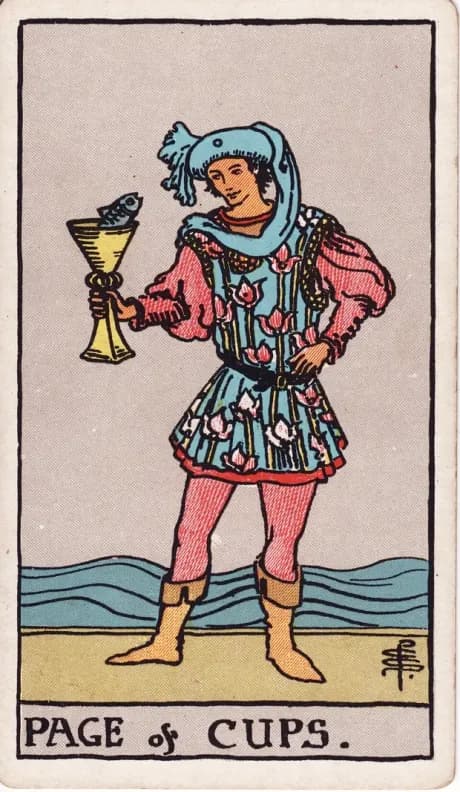
Pages are beginnings and messengers. This one holds a cup with a fish looking out of it, which is exactly as absurd as it sounds, and the card is unembarrassed about the strangeness of the inner life. Its subject is openness without experience: a first attempt, a creative impulse, an intuitive nudge worth following, news that lands somewhere below the reasoning mind.
Upright it says approach this with curiosity rather than expertise, and take the small surprising signal seriously. Reversed the openness curdles into immaturity — a sulk, an impulse acted on before it was understood, or sensitivity that cannot yet survive contact with plain feedback.
In work it is the junior voice with the good instinct, or the idea that arrives sideways during a meeting about something else. In money it is a small unexpected item, pleasant and not structural. In creative life it is the first draft and the exact stage at which editing does the most damage: the material is arriving faster than the judgement to shape it, and the correct response is to write it down, not to improve it.
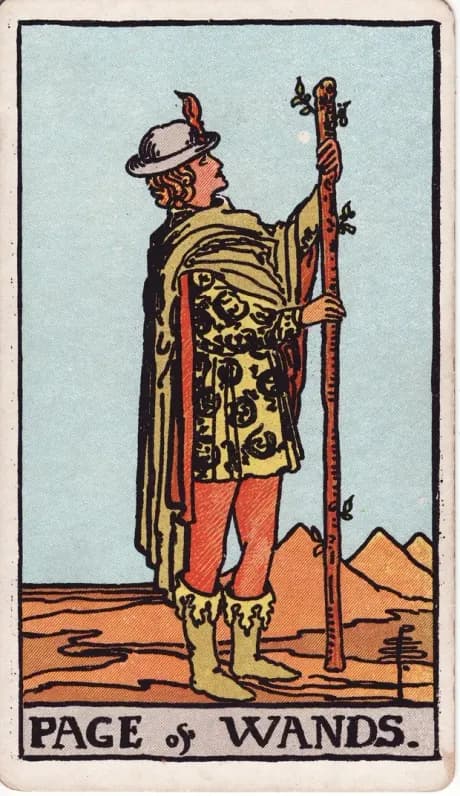
Across the deck the Pages are students. The Page of Wands wants to start something. The Page of Swords watches and asks questions. The Page of Pentacles studies a subject patiently. The Page of Cups feels first and understands afterwards, which is the least efficient method available and the one that notices things the others miss.
A Page can also describe an actual person, of any age, who is a beginner at the specific thing being asked about. Beginner is not an insult here. It means unpractised, unguarded, and still capable of being surprised.
Page of Cups as a yes or no
As a yes or no, the Page of Cups upright is a yes, and it is a small one. Something begins, an overture is made, a message arrives. What the card will not do is confirm the size of it, because a Page describes an opening rather than a conclusion.
That distinction decides how useful the answer is. Will they contact me gets a clear yes here. Will this become serious gets a yes that only covers the first step, and stretching it further than that is reading your own hope back to yourself. When this card answers a large question, the honest translation is yes, in an early form, and more information is not available yet.
Reversed it is a soft no. Not a refusal — a withholding. The feeling exists and does not become a message, or it becomes a hint that never resolves into a sentence. If you asked whether they will say something, reversed says they will want to and will not manage it, at least not in the form you are waiting for.
Because the card is so agreeable and so small, the better question is almost always the next one. Rather than asking whether something will happen, ask what would need to follow the opening for it to hold. This card answers questions about beginnings well, and questions about durability badly, and it is honest about the difference if you let it be.
Page of Cups as advice
As advice, the Page of Cups says send it. Say the plain thing badly rather than waiting until you can say it well, because the wait is not producing a better sentence, it is producing a longer silence.
Concretely: write the message in one attempt and send that version. Ask the direct question instead of arranging a situation where the answer might emerge on its own. Admit the feeling that seems too small to be worth mentioning, since small honest statements are what this card is made of. If somebody has been clumsy toward you, answer the substance and ignore the delivery.
The card also advises taking an odd impulse seriously enough to record it. The idea that arrived while you were doing something unrelated, the hunch about a person, the line you thought of and dismissed — write it down without deciding yet whether it is any good. Judgement can come later. This card is specifically about the stage before judgement, and applying judgement early is how the material gets lost.
There is a permission folded into this that people need more than the instruction. You are allowed to be a beginner. At a feeling, at speaking honestly, at whatever this is. Nothing here requires you to be fluent, and waiting until you are fluent means waiting indefinitely.
Reversed, the advice becomes one line: stop hinting. Convert the signal into a sentence with a subject and a verb in it, and accept that the sentence can be answered with a no. That risk is the whole price, and it is smaller than another season of being misread.
Page of Cups as an outcome
As an outcome, the Page of Cups means something opens rather than something concludes. A message arrives, an approach is made, an honest sentence gets said. The situation you are asking about ends its current phase by starting a new one, and the new one is at the very beginning.
This is a pleasant result and a modest one. It does not describe a settled arrangement, a decision, or anything with weight behind it yet. It describes the first move, made sincerely. If you want to know what the first move turns into, that is a separate question and this card is not answering it — which is worth accepting rather than arguing with, because the most common misreading of this outcome is inflating it into a conclusion.
In a question about a person it usually means contact, and gentle contact. Expect it to be smaller than you hoped and warmer than you feared. In a question about work or a project it means the idea gets voiced, the draft gets started, the tentative version goes out.
Reversed as an outcome the opening does not happen, or happens sideways. The feeling stays inside the person holding it and leaks out as mood, hints and indirect signals that never resolve. Nothing bad occurs. Nothing occurs, which over enough weeks amounts to the same thing.
Either way the card puts the next move in somebody's hands rather than in fate's. Outcomes at this scale are decided by whether a person is willing to say a plain sentence, and that is a choice available every day.
What the Page of Cups card shows
The 1909 card shows a young figure standing on a narrow strip of shore in a blue tunic patterned with pink lotus blossoms, wearing a soft blue cap with a long scarf trailing from it. One hand rests on the hip. The other holds a golden cup at chest height, and a fish is rising out of the cup, curved around to look the figure in the face.
The expression is the point. The Page is not startled and not alarmed. He tilts his head and looks back at the fish with something close to amusement, as though a fish appearing in a drinking vessel were a mildly interesting development. That composure is the whole instruction of the card: something has arrived from below the surface into a container that was not built to hold it, and the correct response is curiosity rather than panic.
Behind him the sea moves in stylised rolling waves, drawn in repeating curves that fill the lower background. He stands beside that water, not in it. The unconscious is present, adjacent and not overwhelming — which is the difference between this card and the ones later in the suit where figures are surrounded by it.
The lotus flowers on the tunic are the flower that grows out of still water and opens at the surface. The blue is the suit's colour, worn rather than carried.
He is the only court figure in the deck holding a cup with something alive in it. Everyone else in the suit holds a cup whose contents are private, implied, or simply liquid. Here the contents have surfaced, taken a shape, and made eye contact, and the Page has not put the cup down.
Frequently asked
Does the Page of Cups mean a message is coming?
+
It is the suit's messenger, so an emotional overture — a text, a reaction, a confession — is plausible and usually sweet. Read the fact of the contact rather than its size. What arrives tends to be smaller and more careful than what the sender actually feels, because this card describes feeling that has outrun the skill to express it.
What does the Page of Cups mean as feelings?
+
A tender crush: new, idealistic, a little shy. Real feeling that has not learned to speak fluently yet. Expect signals before sentences, and expect the feeling to be aimed at a slightly idealised version of you — that firms up with contact rather than with distance.
Is the Page of Cups a yes or a no?
+
Upright it is a yes, and a small one: something begins, an approach is made. It confirms the first step and says nothing about the size of what follows. Reversed it is a soft no — the feeling exists and never converts into a message, or it converts into a hint that nobody can safely answer.
What should I do when I draw the Page of Cups?
+
Send the badly worded version rather than waiting for a good one. Ask the direct question instead of engineering a situation where the answer might surface on its own. Write down the odd impulse before judging it. And if somebody has been clumsy toward you, answer the substance and let the delivery go.
Does the Page of Cups represent a real person?
+
It can. Traditionally it points to someone younger or young-hearted, but the more accurate reading is somebody who is a beginner at the specific thing being asked about — unpractised, unguarded, still capable of being surprised. Just as often it describes a moment rather than a person: the point where a feeling first becomes speakable.