Will He Text Back? What the Cards Say
Whether he replies is mostly decided before you send anything — by where he already was, not by your wording. Tarot cannot report his phone, but it can tell you whether the connection still has energy in it, which is what the waiting is really about.
Pull my cards on thisCards deal the moment you tap. First reading free, no signup.
The message is sent and the day has been ruined. Not by anything that happened — by the possibility of something that has not. This question is almost never about the text. It is about what the silence would mean, and the mind fills that gap with the worst available interpretation, at speed, for hours. What follows is the honest picture: what predicts a reply, what silence usually means, and what to do with the interval, which is the only part of this you actually control.
Which cards speak to this
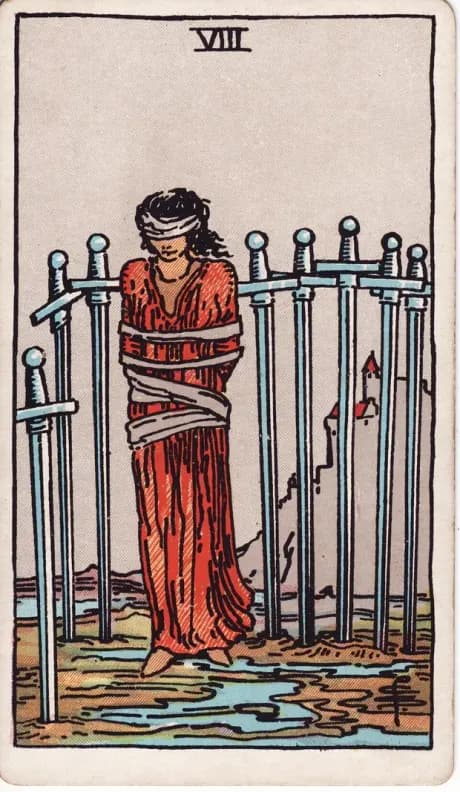
The Page of Cups is the message card — something being composed, or a reply on its way that has not been sent yet. The Knight of Cups says he is moving toward you. The Four of Cups is the difficult one here: he saw it and is not moved, which is not rejection so much as disengagement. The Eight of Swords describes the state you are in rather than his, and it is worth reading honestly. The Two of Cups says the connection is live regardless of the phone.
What actually tells you
The strongest predictor is the pattern before this message. If replies have been reliable, one slow response means a busy day. If they have been getting slower for weeks, this one is part of a trend, and the trend is the information.
Second: what the message asked for. A question with a low cost — a plan, an opinion, a specific thing — gets answered far more often than an open bid for connection. Not because he is calculating, but because the first is easy and the second requires a decision about the relationship.
Third: whether he is visibly active elsewhere. This is the detail that makes people miserable and it is genuinely meaningful once it repeats. A single instance means nothing; a fortnight of it is an answer.
And the tell most people miss: whether the silence is new. People are remarkably consistent in how they handle their phones. A slow replier who has always been slow is not sending you a message. A fast replier who has gone quiet is.
How long this usually takes
Most replies that are coming arrive within a day. After forty-eight hours the odds drop sharply, and after a week a reply usually says something other than what you hoped — it is often an apology-shaped message that closes rather than opens.
There is a pattern worth knowing: the longer someone waits, the harder replying becomes, because the delay itself now needs addressing. This is why messages that were going to be answered easily on Tuesday go permanently unanswered by Friday. It is rarely a decision about you; it is avoidance compounding.
Within the day, the hour matters more than people think. Messages sent late at night sit unanswered until morning and feel like rejection for eight hours that contained nothing.
If you are past a week with no reply and he is otherwise present in the world, treat that as the answer and stop refreshing. Not because it is definitely final, but because the waiting has already cost more than the reply is worth.
What to do with this
Put the phone in another room and do something with an ending. This is not a distraction technique; it is the actual intervention. Almost all the pain here happens in the checking, and the checking is entirely optional.
Do not send the second message to soften the first. It is the single most common regret in this situation, it converts a normal gap into a subject, and it hands him a reason to reply about the wrong thing.
If two or three days pass, you are allowed to move on with your week without declaring anything. Silence does not require a response from you.
And if this has happened repeatedly with the same person, stop treating each instance as an event. A pattern of slow, partial, unreliable contact is a description of what he is offering, and the question worth asking is not whether he will reply. It is whether this is enough.
What this question usually gets wrong
The first misreading is that the reply carries a verdict. It does not — it carries his mood, his week, and how easy your message was to answer. People routinely read a delay as a judgement on themselves when it is usually a fact about a phone.
Second: believing the wording decided it. Perfect messages go unanswered and clumsy ones start relationships. Phrasing can avoid an obvious error; it cannot manufacture interest that was not there.
Third: treating silence as an unfinished conversation you can close. The urge to send something that resolves the discomfort is strong and it reliably makes things worse, because it moves the subject from what you said to how you are handling the wait.
And the honest limit: no card reports what someone is doing with their phone. What a spread can show is whether this connection is still carrying weight — and that is the question underneath, because a reliable reply from someone who is not really there would not have helped anyway.
If he replied right now, what would actually change?
The answer is usually smaller than the size of the waiting, and that gap is worth looking at.
Cards in this answer






Questions people ask next
How long should I wait for a reply before worrying?
+
A day is nothing, two is usually nothing, and past a week the silence is likely to be the message. The pattern before this text matters more than the hours.
He's online but hasn't answered. What does that mean?
+
Once, almost nothing — people open apps without opening conversations. Repeatedly, it means answering you requires more energy than he currently wants to spend, which is worth knowing plainly.
Should I send a follow-up?
+
Not to address the silence. A new message days later with real content is fine; a message about the gap makes the gap the subject and is the one people regret.
Which cards mean he'll get in touch?
+
The Page of Cups for a message forming, the Knight of Cups for someone moving toward you, the Three of Wands for news arriving. The Four of Cups and the Hermit both say he has withdrawn — not against you, but away.