Will We Break Up? What the Tarot Says
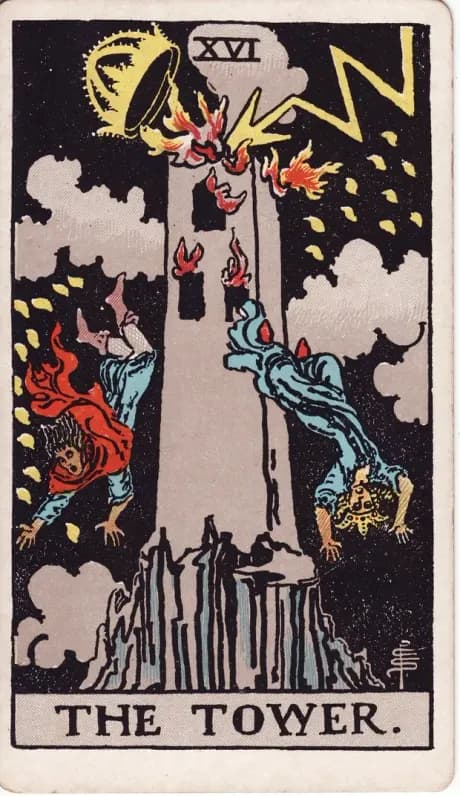
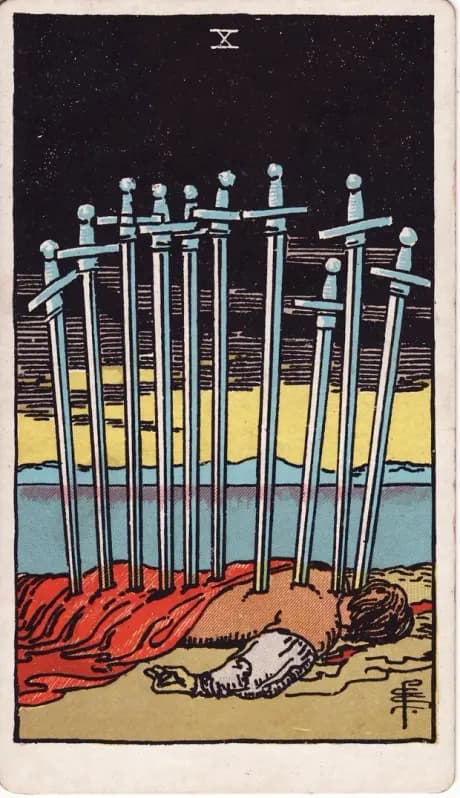
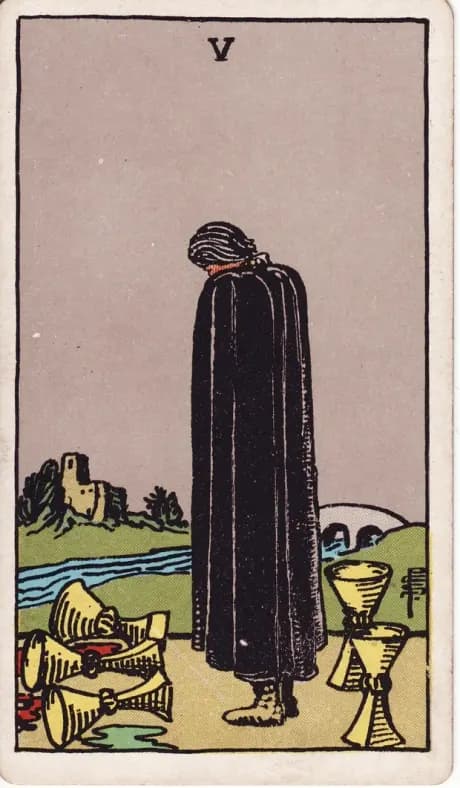
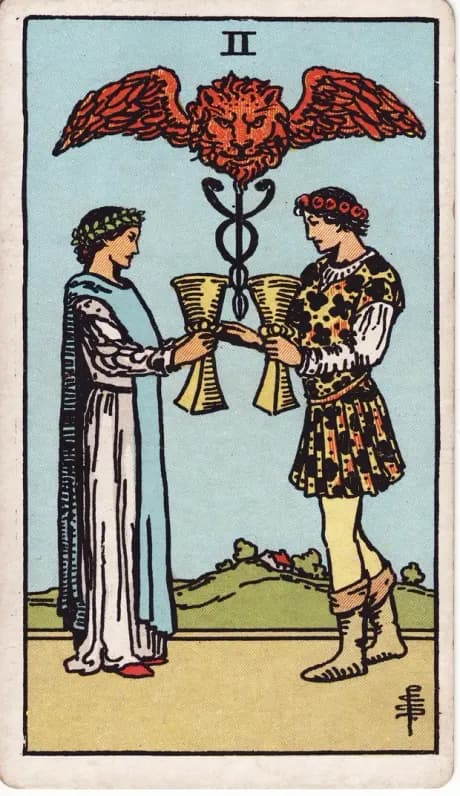
Tarot cannot set a date, and any reader who does is guessing. What it reads is the structure: whether the foundation still holds, where the crack is, and what is coming for it. The Tower, the Ten of Swords and the Five of Cups describe an ending already underway. The Two of Cups and the Hanged Man describe a pause, not a verdict.
Pull my cards on thisCards deal the moment you tap. First reading free, no signup.
Nobody asks this question out of idle curiosity. You ask it because something has changed shape and neither of you has said so out loud yet. Tarot is unusually good here, and unusually bad at what people want from it: it will not name a date, and it will not tell you whose fault it is. What it does is survey the building. Is the foundation still carrying the weight, or is the weight now being carried by habit, logistics and the fear of the conversation? That question has an answer, and you already have most of it.
Which cards speak to this
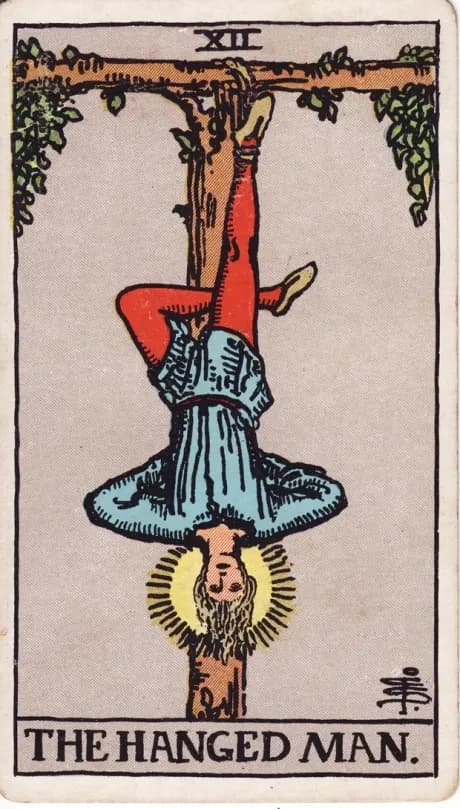
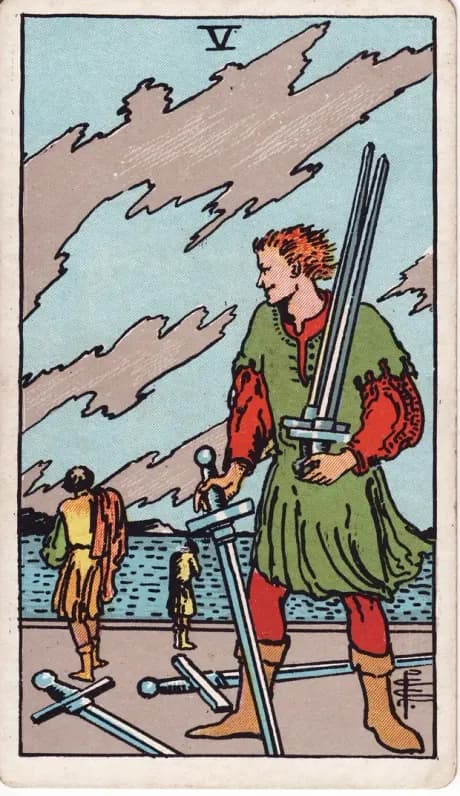
The Tower is the loudest card here and the most misread: it shows the crown blown off and the figures falling, but the rock underneath untouched — something is ending that was never load-bearing. The Ten of Swords is the ending that already happened, months ago, and is only now being noticed. The Five of Cups is grief arriving before the loss, which is its own kind of information. Against them, the Two of Cups says the current still runs both ways and the problem is not the bond. The Hanged Man is the honest middle: suspension, neither leaving nor staying, and the longest a relationship can stay there is usually shorter than you think.
What actually tells you
The reliable predictors are not the fights. They are what happens between them.
Contempt is the strongest one — eye-rolling, mockery, the small dismissals that say you are beneath discussing. It predicts endings better than frequency of conflict, betrayal or money trouble, and it is usually visible for months before anyone names it.
The second is withdrawal from repair. Every couple ruptures; what separates the ones that survive is whether somebody reaches back afterwards. When the reaching stops and both of you simply wait for the weather to pass, the relationship is running on inertia.
Third: separate futures. Listen to how each of you says "next year". If his sentences have started arriving in the singular, the decision is already forming, whatever is being said out loud.
And the quiet one: the loss of curiosity. Not affection — curiosity. When neither of you asks anything you do not already know the answer to, the relationship has stopped being a live thing and become a routine, and routines end without drama.
How long this usually takes
Breakups are decided long before they happen. The gap between one person knowing and the relationship ending is commonly three to six months, and in longer relationships it can run past a year.
That lag explains most of what feels confusing here. The person who leaves has already done their grieving; the person who is left starts theirs on the day. It is also why "it came out of nowhere" is so common and so rarely true — the signals were there, they were simply ambiguous enough to be read as a phase.
There are two structural pressure points worth knowing. Around the two-year mark, when the relationship has to be carried by choice rather than novelty. And at any forced decision — moving, a job elsewhere, a lease ending, a question about children. Forced decisions do not cause breakups; they surface ones already made.
If you are asking this question, the useful version is not when. It is whether what you are feeling is a phase with a shape or a slow arrival at a conclusion. Those feel identical from inside and behave completely differently.
What to do with this
Say the real thing once, out loud, to him. Not the complaint — the fear. "I think we are drifting and I do not want to" opens a conversation that no amount of careful management will. Most couples in this state are each waiting for the other to name it, and the naming is the intervention.
If you cannot say it to him, notice that. The inability to raise it is usually a bigger finding than whatever the drift is about.
Then look at the pattern rather than the week. Pull back far enough to see three months: is this a bad patch inside a good relationship, or a good patch inside a bad one? Both look the same on any given Tuesday, and only the longer view distinguishes them.
And prepare for the possibility honestly. Not by rehearsing the ending, but by checking whether you have a life outside this — friendships, money, somewhere to be. People stay in relationships that have finished mostly because leaving is logistically frightening, and reducing that fear is worth doing whether or not it ends.
What this question usually gets wrong
The first misreading is that fighting is the danger sign. Frequent conflict in a relationship where both people repair afterwards is a healthy pattern. Silence is the one to worry about — couples who have stopped arguing have often stopped negotiating, and negotiation is the relationship.
Second: treating the question as a prophecy to be confirmed or denied. Asking whether you will break up is nearly always a way of asking whether something can be fixed, and the second question is the one with an answer you can act on.
Third: assuming the ending would be sudden. Most are not. The overwhelming majority of relationships end after a long, visible decline that both people quietly participated in, which means there is usually more time to intervene than it feels like.
And a warning about how this question is often answered elsewhere: a reading that predicts a breakup with confidence is telling you a story. What tarot can genuinely do is show what the relationship is built on and what has cracked — and the Tower spread on this site exists for exactly that, because knowing what is load-bearing is more useful than a forecast.
So will you break up?
The cards will not answer that, but they will tell you which part of the building is failing — and a crack you can name is a crack you can decide about. That is what the Tower spread is for: five cards, read bottom to top, from what this rests on to what is still standing after.
Cards in this answer
Questions people ask next
What's the biggest predictor of a breakup?
+
Contempt — the small, habitual dismissals — outperforms conflict frequency, money problems and even infidelity as a signal. The second is the disappearance of repair after arguments.
We fight all the time. Are we doomed?
+
Not by itself. Frequent conflict with reliable repair is survivable and often healthy. The dangerous pattern is conflict that ends in withdrawal, with nobody reaching back.
Can a relationship come back from a rough patch?
+
Routinely, when both people can describe the problem in compatible terms and both are still trying. It rarely comes back when only one person is doing the work, however hard that person works.
Which cards mean a breakup?
+
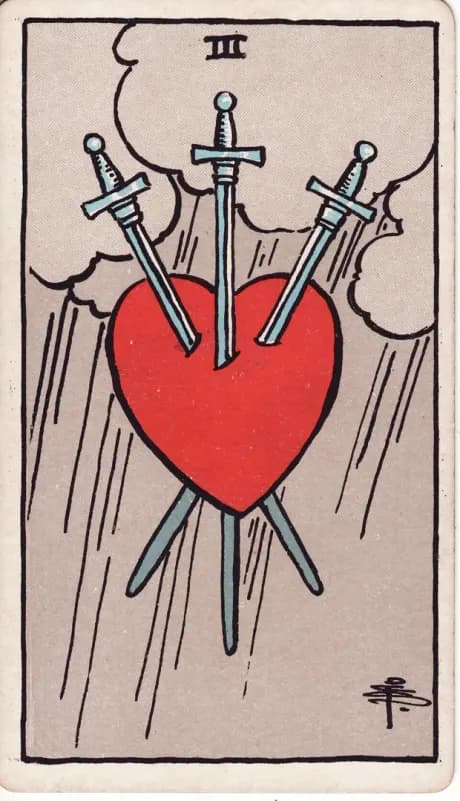
The Tower for a sudden rupture, the Ten of Swords for an ending already complete, the Three of Swords for the pain of it, the Five of Cups for the aftermath. None of them is a sentence — the Tower in particular often clears ground that needed clearing.