Is This Relationship Worth Fighting For?
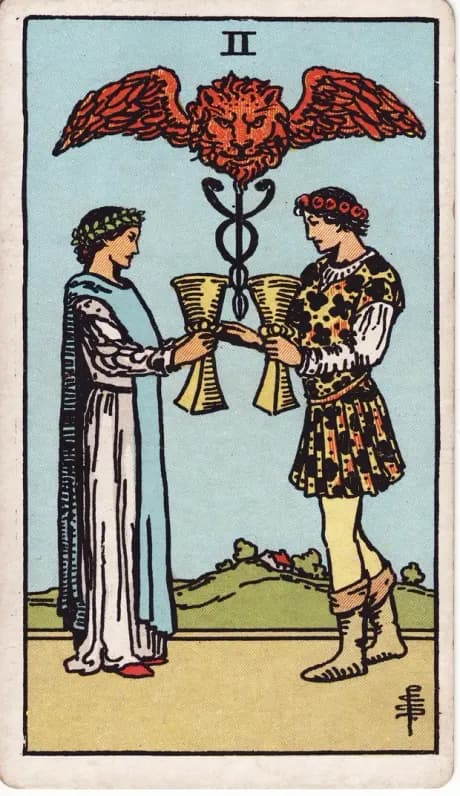
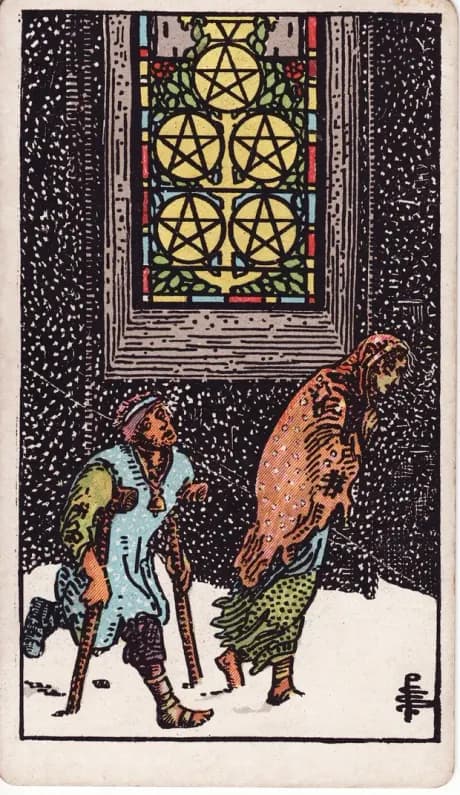
The cards answer this on materials rather than feelings. The Two of Cups, Ten of Cups and Four of Wands say there is something structurally sound worth repairing. The Tower, Five of Pentacles and Ten of Swords say you are maintaining a ruin. Effort is only worth spending when it is mutual.
Pull my cards on thisCards deal the moment you tap. First reading free, no signup.
Some relationships are worth every round of the fight; others just have excellent marketing departments in your memory. Tarot audits the difference. The cards weigh what's actually left — live connection or sunk cost, repairable damage or structural failure — and whether both people would show up to the repair, or just one of you holding the toolbox alone.
Which cards speak to this
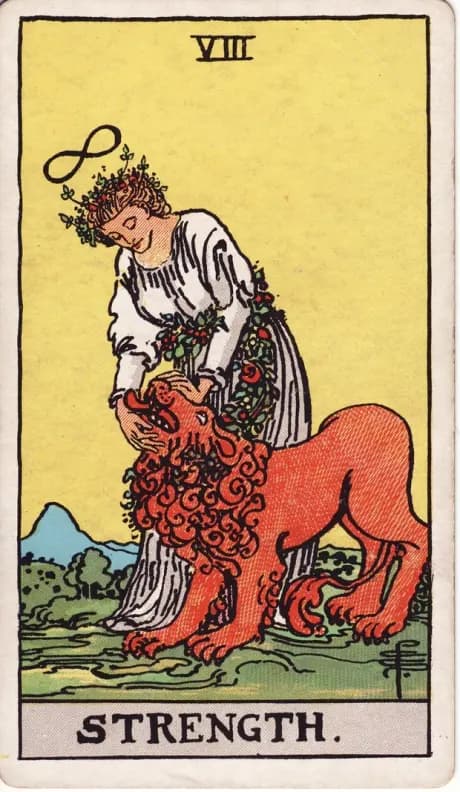
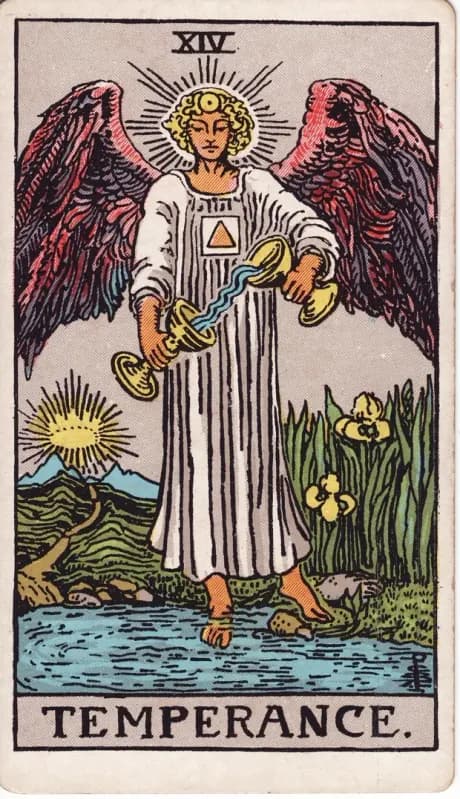
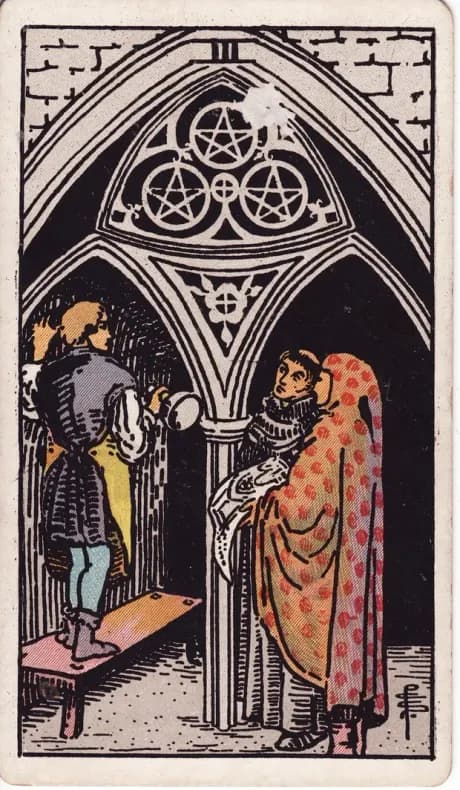
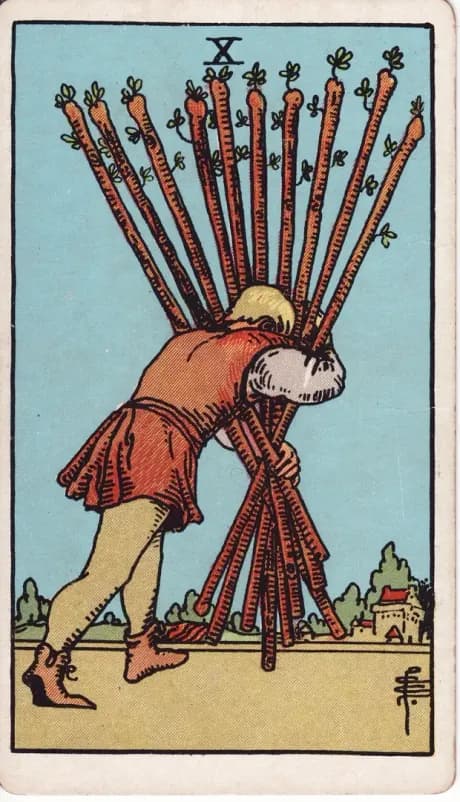
Strength says yes — with patience and softer hands than you've been using. Temperance shows healing available through slow rebalancing. The Two of Cups confirms the core bond still flows both ways. The Three of Pentacles asks the key question: are both people willing to work? But the Ten of Wands warns you're carrying it alone, and the Tower says the foundation itself — not the paint — is what failed.
What actually tells you
The question that actually decides this is not how much you love him. It is whether both of you are still trying — and trying is visible.
Worth fighting for looks like: the arguments are about a problem rather than about each other, he takes at least half the responsibility unprompted, and after a bad week there is a repair rather than a truce. Repair is the single strongest predictor there is. Couples who fight badly but repair reliably outlast couples who never fight and never mend anything.
It also looks like a shared account of what is wrong. If you would each describe the problem in roughly compatible terms, you are dealing with a difficulty. If your descriptions have nothing in common, you are dealing with two people in different relationships.
Not worth fighting for looks like: contempt in the ordinary moments, a slow disappearance of curiosity, and effort flowing in one direction for months. That last one is the practical test — if you stopped doing the work for four weeks, would anything hold it together? If the honest answer is no, you are not in a relationship that needs fighting for. You are carrying one.
How long this usually takes
Give it a defined period, not an open one. Six to twelve weeks of genuine, mutual, specific effort is enough to know whether change is possible — long enough for a real attempt, short enough that you are not spending a year on it.
What matters is that the period starts from an agreement rather than from your private resolution. Deciding alone to try harder for three months is not a trial; it is more of the same with a deadline you will move.
Watch the first fortnight closely. Change that is going to happen usually shows up early and imperfectly — the first attempts are clumsy and that is fine. What is not fine is nothing changing at all for three weeks and then a burst of effort the moment you look ready to leave. That pattern is about retention, not repair, and it repeats.
And if there have already been several rounds of this — the same conversation, the same promise, the same fade — count them honestly. The number of previous attempts is the most predictive figure available and almost nobody counts it.
What to do with this
Write down, on your own, the two or three things that would have to be different for this to be good rather than survivable. Specific and behavioural, not "he should care more". Then say them, once, plainly.
That list does two jobs. It gives him something actionable, which most of these conversations never do. And it gives you a standard, which prevents the slow drift where the goal becomes simply making the discomfort stop.
Then decide what you are willing to keep paying while you find out, and for how long. Not as a threat — as your own budget. Relationships are repaired by two people working on a shared problem; if after a fair period it is still one person working, the finding is in.
And get one outside view. Not the friend who tells you what you want, and not a search engine. Someone who knows both of you, or a professional. The inside of a struggling relationship is the worst place from which to assess it, which is exactly why this question gets asked at 2am.
What this question usually gets wrong
The first misreading is that longevity is a reason. Time invested is spent regardless of what you do next; it is the most common argument for staying and the least valid one. The question is only ever about the future.
Second: mistaking intensity for connection. Relationships in trouble are often extremely intense, and the intensity gets read as proof that something real is there. Frequently what is there is anxiety, which is chemically similar and completely different in what it predicts.
Third: believing love settles it. It does not. Whether you love him is usually not the question — it is whether love is enough to fix the specific thing that is wrong, and for some things it is not, however much of it there is.
And the honest use of a spread: it will not tell you to stay or go, and be wary of anyone who says it did. What it does well is show what is actually in the relationship right now — which parts are alive, what is being avoided, and where the weight really sits. People usually recognise the answer immediately, because they already knew.
Fight for relationships where both people bleed for it.
The cards will show you the truth about effort's distribution — believe them over the highlight reel.
Cards in this answer
Questions people ask next
How do I know when to walk away?
+
When effort has been one-sided for months despite the problem being named, when the same conversation has repeated without change several times, or when contempt has become ordinary. Those three predict far better than how much it hurts.
Can a relationship recover from a breach of trust?
+
Yes, and it takes longer than either person expects and requires the one who broke it to carry the repair. Recovery fails most often not because of the breach but because the rebuilding was left to the person who was hurt.
Is it worth fighting if only I'm trying?
+
One person can start a repair. One person cannot complete one. If your effort has not produced any matching movement after a defined and honest attempt, you are maintaining rather than repairing.
Which cards say a relationship can be saved?
+
The Tower with the Star suggests a rupture that clears the ground. The Two of Cups reversed with the Four of Wands says the bond is intact and the structure is not. The Ten of Swords, honestly read, usually says the ending has already happened.